Tag: stories

  • Taliban tortured and threatened Afghans expelled from Pakistan and Iran, UN says

    Afghan authorities have urged nationals to return, pledging amnesty for anyone who left after the Taliban returned to power in 2021.

    ADVERTISEMENT

    The Taliban have tortured and threatened Afghan nationals who were forcibly returned from Iran and Pakistan because of their identity or personal history, a UN report said on Thursday.
    Pakistan and Iran are expelling millions of Afghans who they say are living in their countries illegally.

    Afghan authorities have urged nationals to return, pledging amnesty for anyone who left after the Taliban returned to power in 2021.
    But rights groups and the UN have repeatedly warned that some of those returning are at risk of persecution because of their gender, profession or links to the former Western-backed administration.
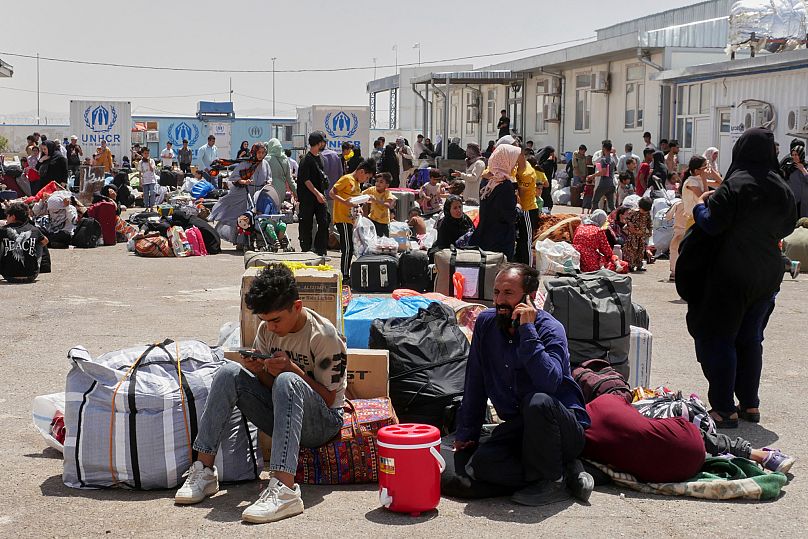
    Thursday’s report from the UN mission in Afghanistan said some people have experienced serious human rights violations, while others have gone into hiding or relocated for fear of Taliban reprisal.Afghan refugees who returned after fleeing Iran to escape deportation gather at a UNHCR facility near the Islam Qala crossing in western Herat province, 20 June, 2025Afghan refugees who returned after fleeing Iran to escape deportation gather at a UNHCR facility near the Islam Qala crossing in western Herat province, 20 June, 2025
    AP Photo

    The violations include torture, ill-treatment, arbitrary arrest and threats to personal security at the hands of the Taliban, according to the report.

    A former government official told the UN mission that, after his return to Afghanistan in 2023, he was detained and severely tortured with sticks and cables. He was waterboarded and subjected to a mock execution.
    A non-binary person said they were beaten severely, including with the back of a gun.
    Volker Türk, the UN high commissioner for human rights, said nobody should be sent back to a country where they face the risk of persecution on account of their identity or personal history.
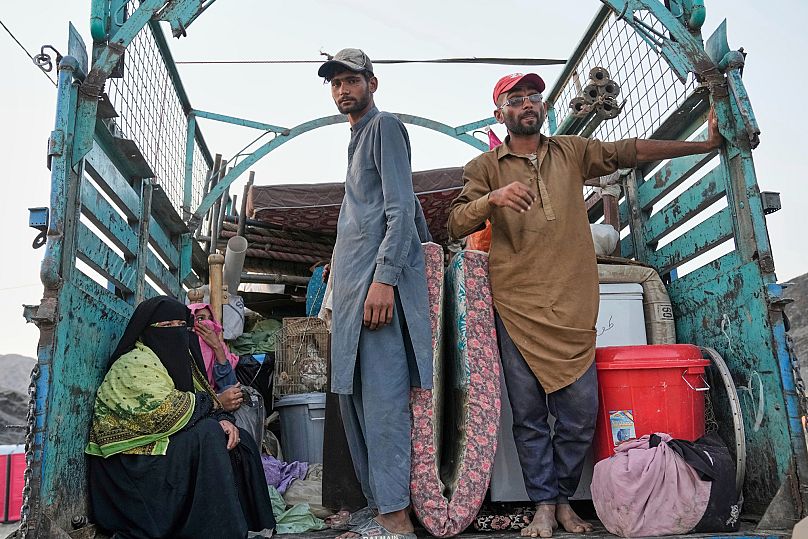
    This was even more pronounced for Afghan women and girls, who were subjected to a range of measures “amounting to persecution based on their gender alone,” he added.Repatriated Afghan refugees arrive at a camp after crossing the Pakistan-Afghanistan border in Torkham, 31 May, 2025Repatriated Afghan refugees arrive at a camp after crossing the Pakistan-Afghanistan border in Torkham, 31 May, 2025
    AP Photo

    The Taliban have imposed severe restrictions on Afghan girls and women, cutting off access to education beyond the age of 12, most employment and access to many public spaces.
    Responding to the report, Taliban authorities denied mistreating Afghan returnees and rejected allegations of arrest, violence, intimidation or retaliation against people because of their identity or personal history.
    Afghans returning from neighbouring countries were provided with facilities related to documentation, transportation, resettlement, and other legal support, they said, while the Interior Ministry provides a “warm welcome.”
    They called on the UN mission to prevent forced deportations, adding the United Nations as a whole “should not hesitate” in providing basic needs to refugees, such as food, medicine, shelter and education.

    An uncertain future

    Afghans who left their homeland in the millions over the decades are either being pushed out in expulsion campaigns, like those in Iran and Pakistan, or face an uncertain future because of reduced support for refugees.
    On Monday, thousands of Afghans in the US lost protection from deportation after a federal appeals court refused to postpone US President Donald Trump administration’s decision to end their legal status.

    Related

    Germany seeks agreement with Taliban to take back convicted Afghan migrants, interior minister saysUN concerned by Taliban’s arrest of Afghan women and girls for dress code violations

    US Homeland Security officials said in their decision to end the Temporary Protected Status for Afghans that the situation in their home country was getting better.
    But groups helping Afghans with this status say the country is still extremely dangerous.
    The Trump administration’s suspension of a refugee programme in January has left thousands of Afghans stranded, particularly in Pakistan, and a travel ban on Afghans has further diminished their hopes of resettlement in the US.

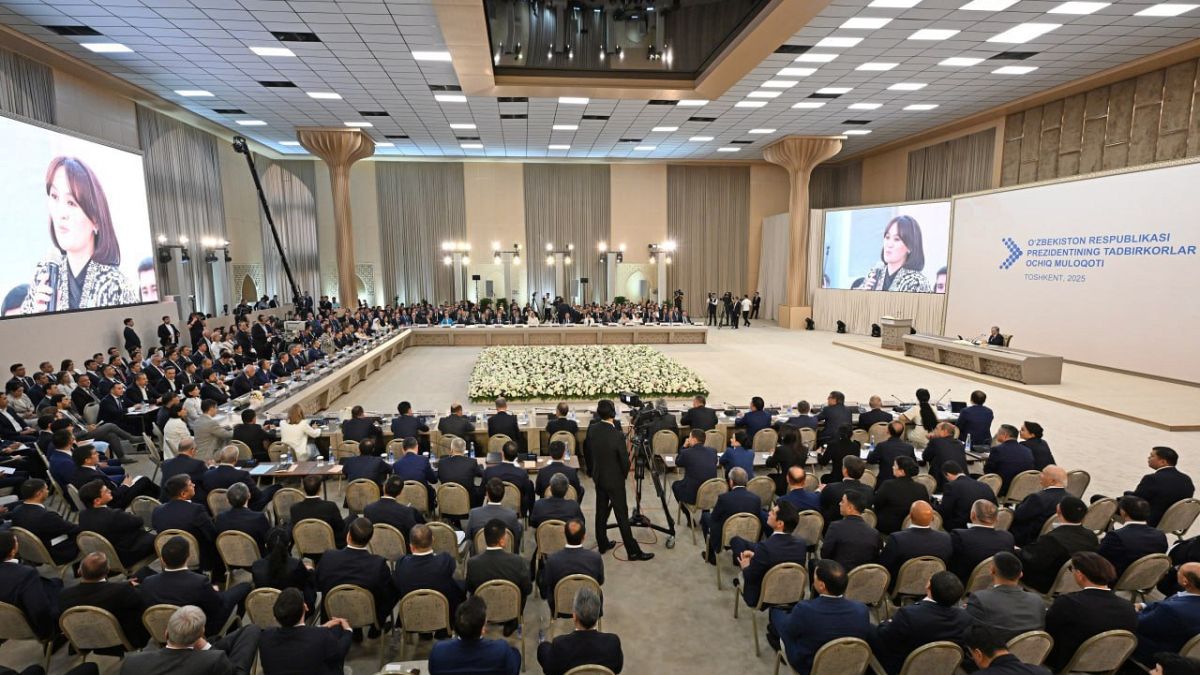
  • Training for tomorrow: Uzbekistan’s new labour strategy

    Training for tomorrow: Uzbekistan’s new labour strategy

    The country is now focusing on equipping workers with the right skills, rather than simply creating jobs. New training centres, digital tools, and vocational vouchers aim to boost employment, cut poverty, and close the skills gap in a changing economy.

    ADVERTISEMENT

    As global labour markets undergo rapid change due to automation, artificial intelligence, and shifting economic demands, Uzbekistan is reassessing its approach to preparing its workforce. The country is shifting its focus from merely counting jobs to building a skilled and adaptable workforce.
    This shift is part of broader efforts to improve employment outcomes, reduce poverty, and ensure that vocational education responds to the realities of the labour market.

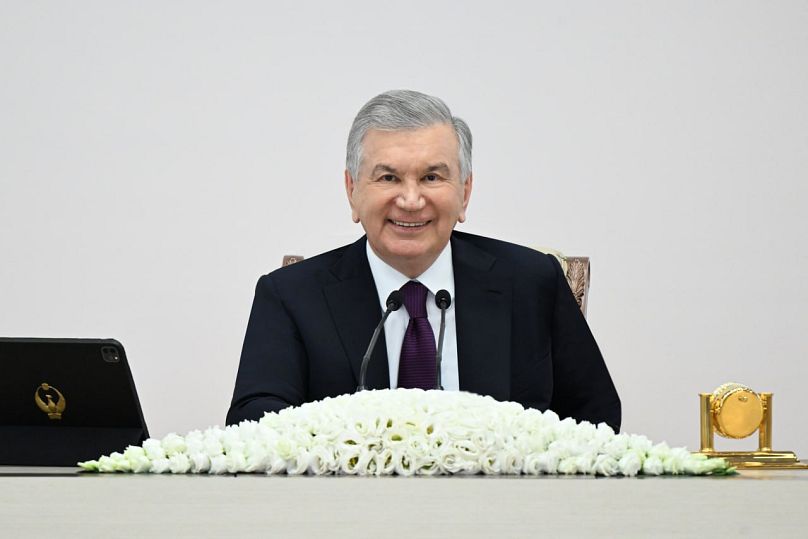
    According to the press service of the president of Uzbekistan, at the beginning of the year, the government set a goal to create 5.2 million job opportunities, provide professional training to over 1 million people, and lift 1.5 million individuals out of poverty by the end of 2025. Notably, in the first half of the year alone, more than 3 million people had already been engaged in paid employment.
    As of June 2025, the unemployment rate in Uzbekistan stood at around 5.1%, representing more than 781,600 people. There were also approximately 4.9 million economically inactive individuals in the country. This group includes individuals currently engaged in activities such as studying, caring for children or family members, taking maternity leave, or those who are not in a position to take up employment immediately.
    According to the government, a plan to create 5.2 million jobs addresses the needs of new labour market entrants, including university and college graduates, returning labour migrants, those seeking better job opportunities, and underemployed individuals. The employment strategy is designed not only to lower joblessness but also to stimulate economic growth and reduce poverty on a broader scale.

    Related

    Uzbekistan: 51 presidential initiatives to boost entrepreneurshipHow is Uzbekistan trying to improve its social protection system?

    From jobs to skills: A change in focus

    The country has expanded vocational training opportunities to ensure that more people, especially those currently unemployed or underemployed, can acquire practical skills aligned with real economic needs.

    Currently, the country has 80 vocational skills centres that can train about 250,000 people annually. Short-term courses lasting 1 to 6 months have been organised to prepare individuals for professions that are in high demand in the labour market. These courses may teach skills related to computer graphics, web programming, and foreign languages, for example. In newly emerging and rapidly growing service sectors, practical training is also provided for professions like call-centre operators, HR inspectors, and secretary-receptionists.
    Euronews spoke to Shahlo Turgunova, a young trainee, who shared her experience in the Tashkent region.
    “My interest in the vocational skills centre has grown even more,” she said.
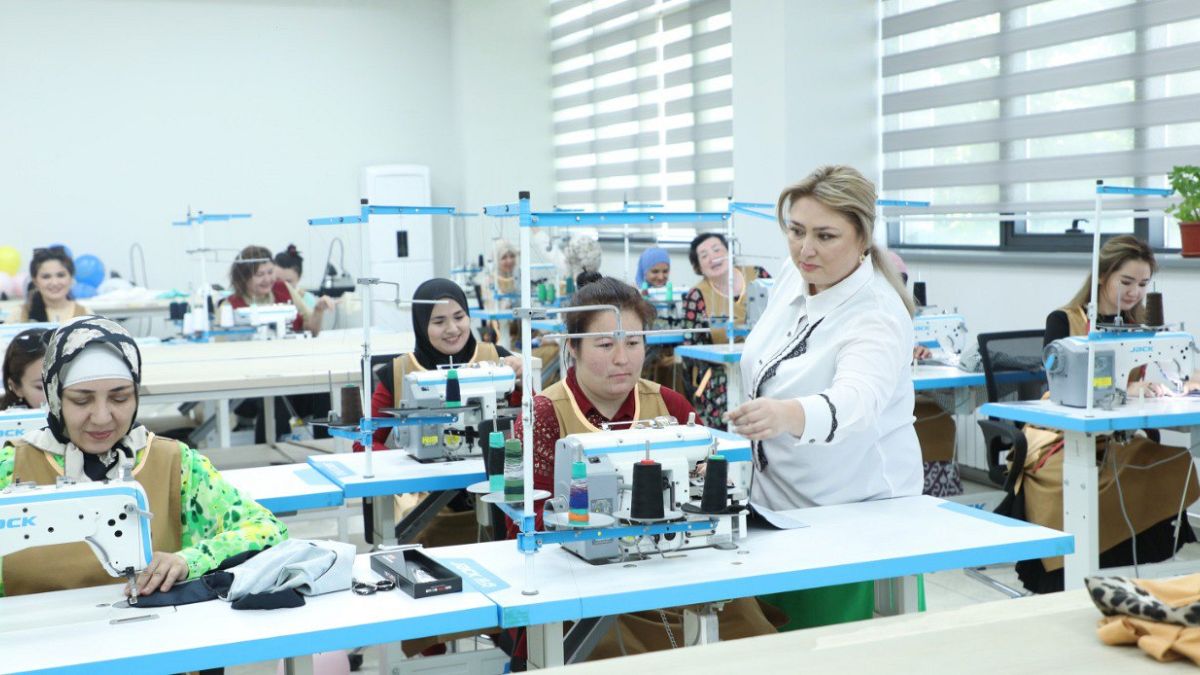
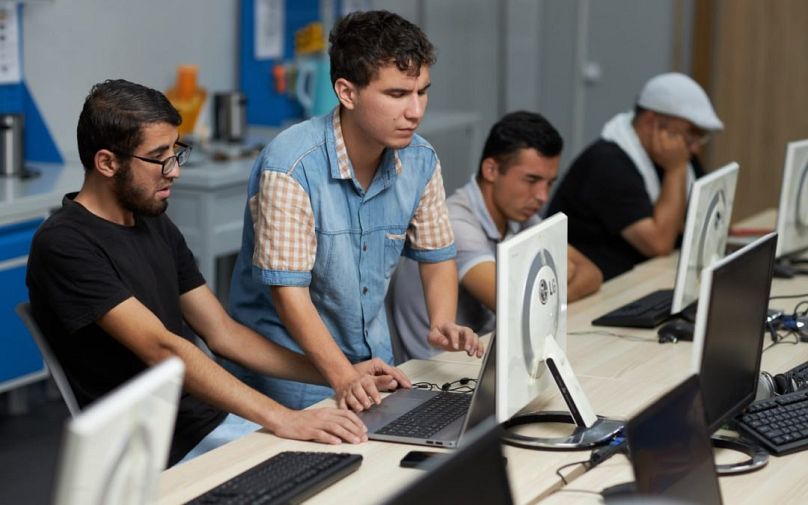
    Shahlo is currently studying at the Akkurgan district vocational skills centre, where training in modern, market-relevant professions is continuously offered. A four-way partnership agreement has been signed with a tailoring company to train skilled specialists according to the client’s needs. Young learners gaining practical experience in computer graphics at the vocational training center.Young learners gaining practical experience in computer graphics at the vocational training center.
    Press service of the Republican Centre for Vocational Skills

    Addressing the skills gap

    Despite Shahlo’s enthusiasm, challenges remain. According to recent data, nearly 45% of employers in Uzbekistan report difficulties finding skilled workers, a reflection of the gap between training programmes and labour market demands.
    In the past, some employers were hesitant to openly share job vacancies with state employment centres due to legal obligations, such as penalties for failing to hire referred candidates. This resulted in incomplete labour market data, making it challenging to plan effective training programmes.
    To address this, Uzbekistan is now taking a more coordinated approach. Training programmes are aligned with actual job vacancies, employers can now post jobs without fear of penalties, and employment centres act as intermediaries, helping connect job seekers with employers more efficiently and transparently.

    Involving the private sector in training

    While vocational centres have traditionally been state-funded, there are now efforts to involve the private sector in training delivery and infrastructure.
    “Currently, all vocational skills centres in the republic are publicly funded,” said Farrukh Hamroev, chief specialist in the Ministry of Employment and Poverty Reduction of the Republic of Uzbekistan. “If we involve the private sector, they can invest through this partnership, renovate the centres, and train more qualified personnel,” he explained.
    In the Kibray district, a centre is being redeveloped to specialise in construction and equipment manufacturing. The project is worth approximately €545,000, with more than €136,000 coming from private investors. The centre will be able to train 1,500 construction and 350 mechanical engineering specialists per year.

    Digital tools for a more transparent labour market

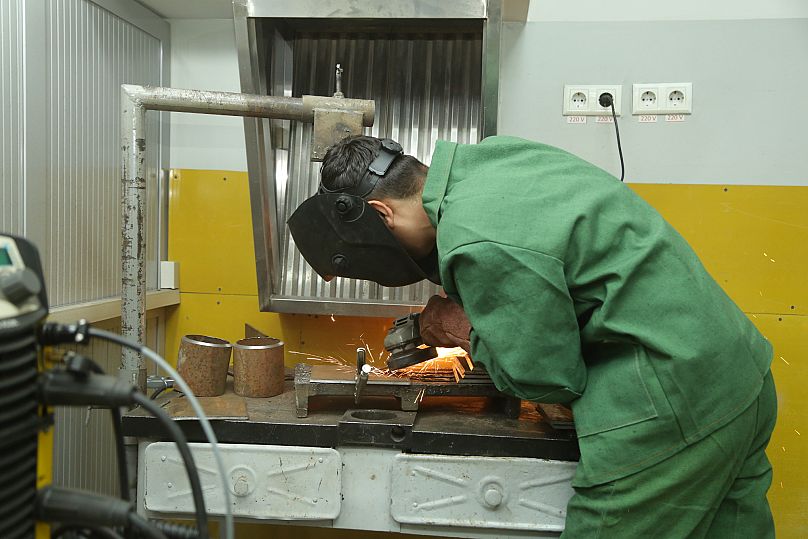
    To streamline the job search and hiring process, a new digital platform will be introduced on 1 January 2026, designed to bring employers and jobseekers closer together. Employers will be able to easily post job openings directly on the platform, while job seekers can create profiles and be matched to jobs based on their skills and qualifications. A dedicated team will review applications and recommend the best candidates to employers.Students participating in a welding internship to gain real-world experienceStudents participating in a welding internship to gain real-world experience
    Press service of the Republican Centre for Vocational Skills

    Vocational vouchers: A new support tool

    Starting in November 2025, Uzbekistan will introduce a “vocational voucher” programme to help people afford vocational training, acting like a loan to cover educational costs.
    After completing the course, earning a certificate, and securing a job, the individual will repay the loan to the State Employment Assistance Fund over the following two years. The amount covered by the vocational voucher depends on the cost of the training programme set by the vocational centre, and there is no publicly announced maximum limit.
    Certain groups, including persons with disabilities and those registered as living in poverty, will be exempt from repayment.
    During their training, some participants will also receive a monthly stipend equivalent to the minimum wage, which is €87. This financial support will be provided to individuals with disabilities, people from low-income families attending courses lasting longer than three months, and those who relocate from their home district to pursue studies.

    A more inclusive system

    Uzbekistan’s vocational reforms focus not only on skills development but also on supporting vulnerable communities.
    Priority access to job referrals will be given to people with disabilities, survivors of domestic violence, orphans, and those without parental care, as well as families registered as living in poverty.
    Whenever possible, these individuals will be offered employment opportunities close to their homes, helping to eliminate barriers related to travel and relocation.

  • Epstein's client list does not exist, Ghislaine Maxwell says

    Epstein's client list does not exist, Ghislaine Maxwell says

    Ghislaine Maxwell, in a transcribed interview, praised President Trump and denied witnessing any inappropriate behaviour. Her comments come as the Trump administration faces scrutiny over handling the Epstein case records.

    ADVERTISEMENT

    Ghislaine Maxwell defended Donald Trump in a court-released transcript, telling investigators the US president “was never inappropriate with anybody” during questioning about her convicted sex-trafficking partnership with Jeffrey Epstein.
    The Trump administration issued transcripts from interviews that the US court conducted with Maxwell last month as the administration was scrambling to present itself as transparent amid a fierce backlash over an earlier refusal to disclose a trove of records from the sex-trafficking case.

    The records show Maxwell repeatedly showering Trump with praise and denying under questioning that she had observed Trump engaged in any form of sexual behaviour.
    The administration was presumably eager to make such denials public at a time when the president had faced questions about a long-ago friendship with Epstein and as his administration had endured continued scrutiny over its handling of evidence from the case.

    Related

    Melania Trump threatens to sue Hunter Biden over Epstein claimTrump says Epstein ‘stole’ young female staff from his Mar-a-Lago resort

    The transcript release represents the latest Trump administration effort to repair self-inflicted political wounds after failing to deliver on expectations that its own officials had created through conspiracy theories and bold pronouncements that never came to pass.
    By making public two days’ worth of interviews, officials appear to be hoping to at least temporarily keep at bay sustained anger from Trump’s base as they send Congress evidence they had previously kept from view.

    After her interview, Maxwell was moved from the low-security federal prison in Florida to a minimum-security prison camp in Texas to continue serving a 20-year sentence for her 2021 conviction on allegations that she lured teenage girls to be sexually abused by Epstein and or his friends.
    Her trial featured sordid accounts of the sexual exploitation of girls as young as 14 told by four women who described being abused as teens in the 1990s and early 2000s at Epstein’s homes.
    Neither Maxwell’s lawyers nor the federal Bureau of Prisons have explained the reason for the move, but one of her lawyers, David Oscar Markus, said in a social media post Friday that Maxwell was “innocent and never should have been tried, much less convicted.”

    ‘Never inappropriate’

    “I actually never saw (Trump) in any type of massage setting,” Maxwell said, according to the transcript. “I never witnessed the president in any inappropriate setting in any way. The president was never inappropriate with anybody. In the times that I was with him, he was a gentleman in all respects.”

    Maxwell recalled knowing about Trump and possibly meeting him for the first time in 1990, when her newspaper magnate father, Robert Maxwell, was the owner of the New York Daily News. She said she had been to Trump’s Mar-a-Lago estate in Palm Beach, Florida, sometimes alone, but hadn’t seen Trump since the mid-2000s.
    Asked if she ever heard Epstein or anyone else say Trump “had done anything inappropriate with masseuses” or anyone else in their orbit, Maxwell replied, “Absolutely never, in any context.”
    Maxwell was interviewed over the course of two days last month at a Florida courthouse. She was given limited immunity, allowing her to speak freely without fear of prosecution for anything she said except for in the event of a false statement.
    Meanwhile, the Justice Department on Friday began sending to the House Oversight Committee records from the investigation that the panel says it intends to make public after removing the victim’s information.

    High-profile contacts

    The case had long captured public attention in part because of the wealthy financier’s social connections over the years to prominent figures, including Britain’s Prince Andrew, former US President Bill Clinton, and Trump, who has said he had a falling-out with Epstein years ago — well before Epstein came under investigation.
    Maxwell told the US Justice Department that Clinton was initially her friend, not Epstein’s, and that she never saw him receive a massage — nor did she believe he ever did. The only times they were together, she said, were the two dozen or so times they travelled on Epstein’s plane.
    “That would’ve been the only time that I think that Clinton could have even received a massage,” Maxwell said. “And he didn’t, because I was there.”
    She also spoke glowingly of Prince Andrew and dismissed as “rubbish” the late Virginia Giuffre’s claim that she was paid to have a relationship with Andrew and that he had sex with her at Maxwell’s London home.
    Maxwell sought to distance herself from Epstein’s conduct, repeatedly denying allegations made during her trial about her role.
    Though she acknowledged that at one point Epstein began preferring younger women, she insisted she never understood that to “encompass children”.
    “I did see from when I met him, he was involved or — involved or friends with or whatever, however you want to characterise it, with women who were in their 20s,” she told the attorney.
    “And then the slide to, you know, 18 or younger looking women. But I never considered that this would encompass criminal behaviour.”
    Epstein was arrested in 2019 on sex-trafficking charges, accused of sexually abusing dozens of teenage girls, and was found dead a month later in a New York jail cell in an apparent suicide.

  • After 37 Years, Anna Wintour Steps Down as Vogue Editor-in-Chief

    After 37 Years, Anna Wintour Steps Down as Vogue Editor-in-Chief

    Anna Wintour, the Queen of Couture, is Saying Goodbye to Vogue

    In a move that has sent shockwaves through the fashion world, Dame Anna Wintour, the legendary editor-in-chief of American Vogue, is stepping down after an impressive 37-year reign. The iconic British-born stylist, who has shaped trends for generations, shared the news during a staff meeting, leaving the newsroom buzzing with excitement and disbelief.

    What’s the Next Chapter?

    • Anna has a new title: Head of Editorial Content – a role that will see her shift from daily editorial decision‑making to guiding the magazine’s overall storytelling.
    • The appointment opens the door for fresh leadership at the helm of Vogue’s daily operations.
    • Fans and fashion insiders alike are eager to see how this change will ripple through the brand’s iconic style and editorial vision.

    Why This Is Big News

    With her shut‑eye vision for cutting trends that feel like runway gold, Anna has practically become a living legend in the industry. While it might seem like now is the moment for someone new to step up, she’s not quitting for good – she’s just changing her game plan. The Nazareth of the original Edinburgh reporter will be giving her team a steady hand for exciting times ahead.

    Feel the Pinch of Nostalgia

    Beloved’s usual presence is likely to be missed on the morning coffee break, but her footsteps will echo loudly in every page turned within the glossy pages of Vogue.

    Anna Wintour: The Queen of Vogue is Resigning the Big Chair—but Not The Whole Crown

    The Big News

    After decades of steering Vogue’s creative ship, 75‑year‑old Anna Wintour has told staff that she’s stepping down as Editor‑in‑Chief. She’s on a quest for a Head of Editorial Content to take care of the day‑to‑day grind.

    What She’s Keeping

    • Chief Content Officer at Condé Nast – keepers of the editorial DNA.
    • Global Editorial Director for Vogue – still calling the shots from the top.
    • A promise that the magazine’s stylish legacy stays secure under her elusive gaze.

    And That Witty Side Note…

    Wintour closed the conversation with a playful grin: “I plan to remain Vogue’s tennis and theatre editor in perpetuity.” In other words, she’ll forever be the omniscient judge of every swinging racket and stage drama—no time‑bound limits, no dry‑run options.

    So, while she’s handing over the daily desk job, Anna Wintour’s influence continues to ripple across the glossy pages. She’s found a new role that lets her focus on the big vision, while still being the queen of every runway, autograph, and, yes, every tennis match and theatrical performance that makes Vogue legendary.

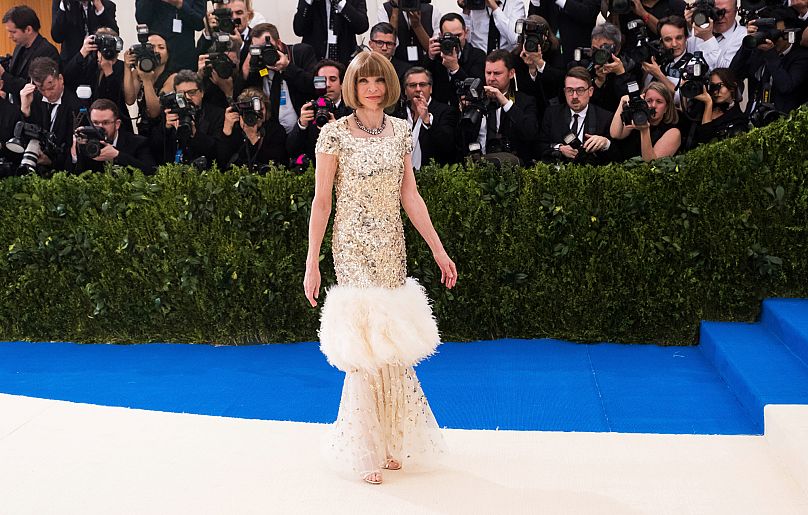
    Anna Wintour at The Metropolitan Museum of Art's Costume Institute benefit gala - May 2017

    Anna Wintour’s New Mission at the Top

    It’s not just a title change— it’s a full‑blown makeover of the fashion kingdom.

    Who’s the Cool New Kid on the Block?

    Meet the brand‑shaking, print‑in‑the‑air, style‑savvy Chief Content Officer. She reports straight to Wintour herself in her glamorous role as global editorial director.

    Why It Matters

    • She’s the one holding the reins for every Condé Nast outfit—Vogue, Wired, Vanity Fair, GQ, Glamour, Bon Appétit, Tatler, Allure, you name it.
    • Besides The New Yorker, she’s steering the entire media ship. Think of her as the helm on a super‑beautiful cruise.
    • Her job isn’t only about the glossy pages—she’s also keeping a keen eye on Vogue World, the magazine’s globe‑trotting, culture‑flying extravaganza launched in 2022.
    Wintour’s Pitch to the Next Gen

    “If you’re in a creative field, you better keep growing.” That’s the mantra behind the new role. Wintour says she’s eager to prove that an American fashion magazine can shatter the glass ceiling and come out looking spectacular.

    She’s not just about headlines; she’s about the people behind the ink. “My joy? It’s in championing the next wave of editors who bring fresh ideas to the runway,” she chuckles, “all wrapped up in a new, exhilarating vision of what a giant media house can truly be.”

    A Hot Seat? A Winter Coat? Swaddle? Whatever you call it, it’s magic city vibes, that’s for sure.

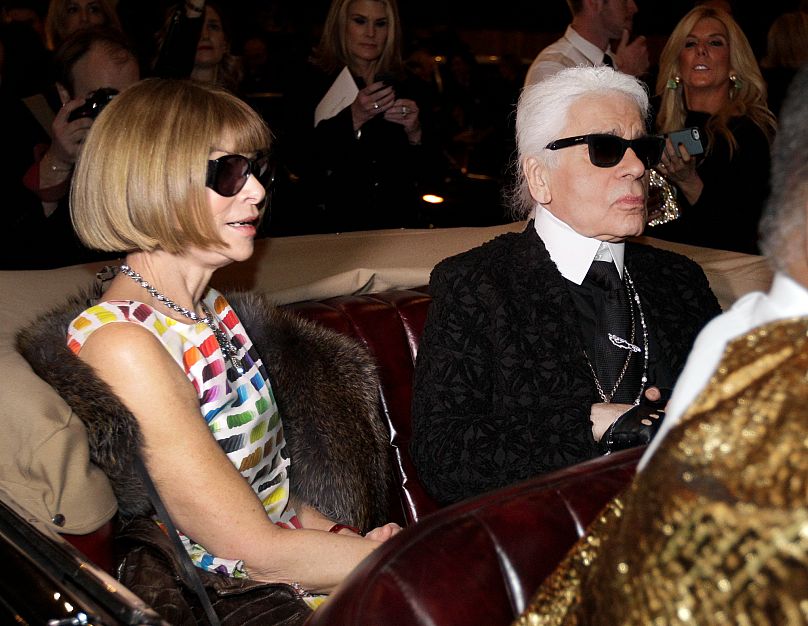
    Anna Wintour and designer Karl Lagerfeld - 2013

    Anna Wintour’s Unexpected Exit: A Fashion Shockwave

    Picture this: the Vogue icon, the queen of glitz and the mastermind behind the Met Gala, pulling the plug on her own empire. That’s exactly what happened with Anna Wintour in 2013.

    Who’s Anna Wintour?

    • Editor-in-chief of Vogue – the one who makes sure every haute couture piece looks a little bit better.
    • Met Gala Chief – the genius that turns a night of stars into a fundraiser that keeps the Metropolitan Museum’s fashion wing thriving.
    • Fashion’s Most Powerful Woman – the person who can make an entire year of trends feel brand new.

    Why the Big Phone Call?

    In a surprising move, Anna decided to step down from Vogue. Some say she wanted to focus more on the Met Gala, some say it was a well-deserved “pause” after years of powering the industry. Whatever the reason, the announcement left fashion editors, runway designers, and millions of followers holding their breath.

    Reactions Across the Fashion World

    • “We’re losing a powerhouse!” – Mode houses everywhere warned that the industry was about to lose a guiding light.
    • “Dance with the future!” – Ampersands thought it was time for fresh eyes and new ideas.
    • “A bit like losing the CEO of a household name brand. – Even the designers (yes, even Karl Lagerfeld’s legendary studio!) felt the impact.
    Looking Forward

    While Wintour stepped away from the magazine, her legacy is cemented. The Met Gala pulses on, full of glitter, dubiously runway-worthy gowns, and celebrities who couldn’t get enough of the spectacle. And while the headlines might stop, the whispers of her influence ripple through every page that prints style in the coming years.

    Hillary Clinton and Anna Wintour at the Oscar de la Renta Forever Stamp dedication ceremony - 2017

    Hillary Clinton & Anna Wintour Hit the Spotlight at the Oscar de la Renta Forever Stamp Event

    Picture this: 2017, a dazzling ceremony where the iconic Oscar de la Renta announces its Forever Stamp. Hillary Clinton and the legendary Anna Wintour grace the red carpet, hand‑off their smiles, and share a moment that blends politics, fashion, and a dash of nostalgia.

    Why It’s So Epic

    We’re talking about a dual-star lineup that’s almost too good to be true. Hillary, a political powerhouse, and Anna, the master of Vogue, together create a visual story that tells more than just the brand’s heritage.

    Anna Wintour: The Vogue Dynamo

    • 1983: Anna becomes the creative director of Vogue, setting the stage for a big shift.
    • 1985‑1987: She takes the helm as editor‑in‑chief of British Vogue, turning it into a must‑read catwalk.
    • Later in her career, she’s back at American Vogue as editor‑in‑chief, merging high fashion with everyday style.
    • Wintour famously dressed up the magazine by putting super‑stars on covers and mixing runway looks with street‑wear, making couture feel accessible.

    Her Legacy in a Sentence

    Anna Wintour didn’t just edit a magazine. She wrote a new chapter in fashion, proving that a queen can make the world of glam truly inclusive.

    Bee Carrozzini, left, and Anna Wintour arrive at the 78th Tony Awards - 8 June 2025

    Star‑Studded Spotlight: Bee Carrozzini & Anna Wintour Blitz the Tony Awards

    Bee Carrozzini—the stylish mastermind with a knack for spotting fresh talent—walks beside the legendary Anna Wintour into the glittering halls of the 78th Tony Awards on June 8, 2025. The duo’s arrival is everything to be seen: flashes, tuxes, and the promise of fashion magic.

    Why This Pair Matters

    Bee’s record is as impressive as a runway set to “Vogue” on loop:

    • She championed trailblazing designers like Marc Jacobs, turning their sketches into global sensations.
    • She brought the avant‑garde Alexander McQueen to the mainstream, letting the world catch that “watch my boots!” vibe.
    • Her collaboration with John Galliano added a touch of dramatic flair—think fireworks and sequins.

    Expanding the Brand’s Universe

    Beyond runway wins, Bee broadened her brand by launching new titles that are popping up all over the globe. From Paris to Tokyo, her products have turned the world into her very own fashion lab.

    In Short

    Bee Carrozzini and Anna Wintour two high‑flying style icons set the stage at the Tony Awards, showcasing the future of fashion and proving that great design never sleeps—even in New York’s theatrical twilight.

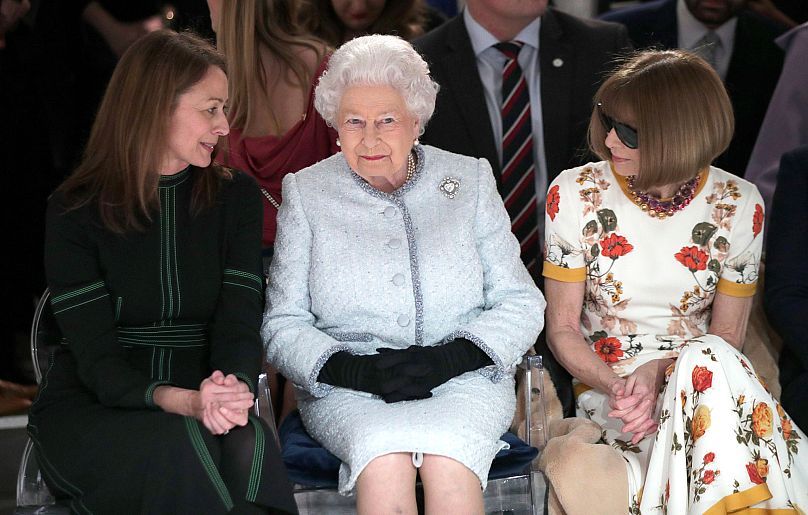
    Queen Elizabeth II sits next to fashion editor Anna Wintour - 20 February 2018

    Anna Wintour’s Royal Moment: A Queen, a Dame, and a Peek‑into the Future

    Picture this: Dame Anna Wintour, the legendary fashion editor known for her magistral taste and razor‑sharp wit, standing proudly by Queen Elizabeth II at the grandeur of Buckingham Palace.

    Why the Royal Big‑Brother Came to Pay Her Tribute

    • The Queen personally awarded Anna a Damehood for her extraordinary contributions to the world of fashion.
    • In a ceremony that felt half makeover half monarchy, the Queen conferred a medal and a title that, let’s be honest, added a touch of sparkle to Anna’s already dazzling résumé.
    • It was a reminder that the realm of style is as much about rules as it is about rebellion.

    Anna’s “No”. That’s How She Keeps It Going

    After the ceremonial applause, the queen slid a question into her lap like a friendly snoop: “Will this mean you’re calling it quits?” Anna’s response was as punchy as her haircuts: NO.

    She clarified that the prestige doesn’t signal retirement; it merely confirms that she’s been “doing her job a very long time.” A hint that the sewing machine of creativity is still humming strongly in her studio.

    Why This Matters for Fans of Fashion

    For those who’ve followed Anna’s journey from Vogue to a symbol of chic authority, this moment is a comforting (and slightly daft) reassurance—all the royalty and accolades still won’t replace her signature “no nonsense” edit.

    In short, a new title won’t mean new eyes—Anna keeps her stylin’ spirit alive and firing that runway on as usual!

  • Wimbledon breaks with tradition, replacing sharply dressed line judges with AI to call shots

    Robots on the Tennis Court: A New Era or a Technical Drama?

    What Changed?

    In a bold move that has tennis fans buzzing, the traditional suited line judges are now being replaced by high‑tech robots. These gadgets claim to deliver spot‑on decisions faster than a human can shout.

    Why Some Fans Are Feeling Deflated

    There’s a small wave of backlash from purists. They say the glitz and glamour that made stadiums feel electric are slipping away when a silver machine takes the edge of the line. Picture a whisper of a drone instead of a booming announcement—does the court feel a little less dramatic?

    Players’ Tech Troubles

    Even those who’ve won their first match have stumbled over new glitches:

    • False Calls: The robot occasionally misreads a ball, calling the wrong side and causing players to scramble.
    • Lag Time: Some decisions appear to take a moment longer than expected, triggering “I’m not seeing this!” moments.
    • Communication Gaps: Players report that the technology doesn’t allow them to present arguments, just raw data.

    Emotion in the Breakdown

    While the goal is to remove human error, the emotional connection players have with a live judge is hard to duplicate. Sparks of excitement explode when a line judge swears loudly, celebrating a perfect call—robots bring calm, not fireworks.

    What Might Come Next?

    House officials are listening. There’s talk of hybrid solutions, mixing human judgment with robo‑assistance, so the future might hold a little bit of both worlds.

    ADVERTISEMENT

    Technology is replacing tradition at the quintessentially British tennis grand slam, Wimbledon. 
    The rules require players to wear all-white kits, and the tournament is known for serving strawberries and cream on the stands. 

    But Wimbledon, which started on Monday, is for the first time breaking its 147-year tradition of having line judges in characteristic suits determine if the ball is in or out of bounds. They have been replaced with robots and artificial intelligence (AI) that uses camera footage to track the ball and make calls.
    There were some small protests against the technology’s use outside the tournament, while some people on social media said that the missing human judges took the theatrics out of the game. 

    Related

    Denmark fights back against deepfakes with copyright protection. What other laws exist in Europe?

    But players also had some quibbles about the technology.
    In the women’s draw, the Chinese player Yuan Yue said that the system was too quiet to hear the line calls. 

    “The voice, I cannot really hear it, it is a bit too low,” media outlets quoted her as saying. She said she asked the referee to turn up the volume, but that the referee told her he could not. Spectators wear hats to protect from the sun during the Wimbledon Tennis Championships in London, Monday, June 30, 2025.Spectators wear hats to protect from the sun during the Wimbledon Tennis Championships in London, Monday, June 30, 2025.
    AP Photo/Kirsty Wigglesworth

    “I don’t really mind, I just want to hear it clearly. [The umpire’s] voice is a lot more loud than the automatic one so we can hear that clear. Other tournaments don’t really have this problem,” she added. 
    The technology, electronic line calling, was also used at the Queen’s Club Championship in London earlier this month. 

    “They have used very calm voices — it sort of sounds like the voice isn’t sure,” former line judge Pauline Eyre, who worked the lines at Wimbledon for 16 years, told BBC Sport.
    “Sort of like it’s saying ‘Out… I think’. It feels a bit awkward,” she added. 
    “We will use different voices on different courts so there is no confusion across courts that are close together,” Eloise Tyson, Head of Communications at Wimbledon, told BBC Sport.
    The AI-generated line caller is a recorded voice, but Wimbledon has said it will not make individuals the face of electronic line calling. 
    Meanwhile, both Fabio Fognini and Carlos Alcaraz questioned the use of the new system in their highly-anticipated first match. However, the human umpire still has the final say. 

    Related

    Photos: Humanoid robots in Beijing play a football match as China steps up AI plans

    How does the technology work?

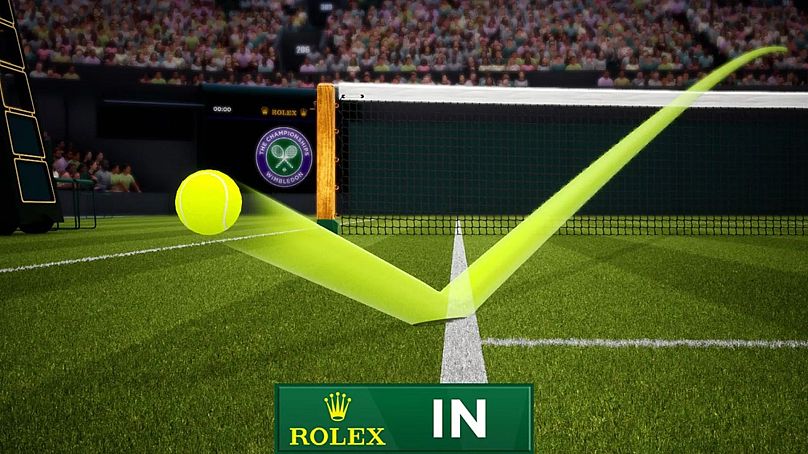
    The line-call system was developed by the Sony-owned Hawk-Eye system. It uses AI to analyse footage from up to 18 cameras, which track the ball across the court.
    The company says that the tech issues a notification within a tenth of a second if the ball is out and can track the ball to within three millimetres. Live images of the ball can be verified by humans. Image depicts the technology Image depicts the technology
    Hawk Eye Innovations

    Wimbledon is not the only tennis tournament to use tech; the US and Australian Opens use it too. 
    However, the French Roland Garros tournament has kept its human line judges, with the organisers arguing for keeping with traditions. 
    Hawk-Eye is also used in sports such as volleyball, football, and rugby. 

  • Japan Elevates Quantum Field: Unveiling the World\’s Largest Superconducting Quantum Computer

    RIKEN & Fujitsu Launch a 256‑Qubit Quantum Beast

    Picture a quantum computer that packs a whopping 256 qubits into one sleek box—plenty of brains for the next generation of computing. That’s the sweet spot RIKEN (Japan’s National Research & Development Agency) and the tech titan Fujitsu are targeting together.

    It’s Not Just About the Numbers

    But, as the experts point out, the quality of each qubit matters just as much as the quantity. If even a single qubit can’t keep its cool, the whole system can go haywire.

    Why “Good Qubits” Are the Real Game‑Changers

    • Speed: High‑quality qubits crunch data faster.
    • Reliability: Failing qubits mean more errors that can’t be patched up.
    • Future‑Proofing: The only way to scale quantum tech is to keep qubits steady.
    Bottom Line

    RIKEN and Fujitsu are pushing the envelope with 256 qubits, but the real sprint lies in turning each qubit into a rock‑solid performer. Numbers alone won’t win the race—quality’s the real driver.

    Japan Unleashes the Quantum Beast

    Picture this: a super‑cold machine humming with 256 qubits, humming louder than a choir of supernovae. That’s the latest triumph from RIKEN and Fujitsu, and it’s sweeping the headlines as the biggest superconducting quantum computer to date.

    What’s a Qubit Anyway?

    Think of a qubit as the rebellious cousin of a classic computer bit. Instead of being strictly 0 or 1, it can be both at once—thanks to the quirky rules of quantum mechanics. This double life lets quantum computers juggle a colossal amount of possibilities, all at the same pace.

    Superconducting: The Road to Quantum Dominance

    • Google’s Sycamore dazzled the world with 70 qubits, but it was just a taste.
    • IBM’s Condor packs a whopping 1,121 qubits, though it’s largely locked away from the public.
    • Our Japanese Crusader claims the crown with 256 qubits—mark it as a milestone.

    It’s not all about raw qubit count; noise, error correction, and the sweet spot of decoherence all play crucial roles. In plain English, the most useful quantum computer isn’t the one with the most qubits—it’s the one that keeps them playing nice.

    The One‑Million Quibit Dream

    Industry buzz hints that to truly harness quantum’s mind‑blowing power, we’ll need a jaw‑dropping one million qubits. Until then, we’ll be enjoying impressive, yet practical, results from machines like RIKEN’s.

    Why This Matters

    Whether it’s solving cryptography puzzles, cracking chemical simulations, or predicting weather patterns, every added qubit brings us closer to a future where quantum computers are the everyday heroes—minus the sci‑fi paranoia.

    And hey, if you’re feeling a bit over the top about it, just remember: even on the quantum frontier, a little humanness (and a dash of humor) goes a long way.

    Quadrupled density

    Quantum Lab Tackles the Cold‑Crisis: 256‑Qubit Wonder!

    Picture the tiniest of computers, but pack them with 256 superconducting qubits—four times the size of any earlier machine that crammed only 64 into the same chassis. This is no 8‑bit toy; it’s a quantum beast that scientists at RIKEN and Fujitsu have just brought to life.

    How They Got It All to Fit

    • They built 4‑qubit “unit cells” and cascaded them side by side.
    • Then, they stacked these cells in three dimensions—a trick called a 3D connection structure. Think of a Rubik’s Cube, but each little square can do some mind‑blowing math.
    • “We can scale the chip without redesigning it each time,” claims Yoshiyasu Doi of the RIKEN‑FUJITSU Collaboration Centre. ”It’s like swapping out a 7‑pack of playing cards for a 2‑pack—easy and swift!

    Keeping Things Chilly (Literally)

    Quantum bits cry out for temperatures closer to absolute zero—so cold you could freeze rain with your sneeze. The new system goes to 20 millikelvin, a laughable fraction of a degree above absolute zero.

    • It has a super‑cooling system that’s been tweaked to reduce heat from the amplifiers by over 60 %. That’s a huge win because as qubits pile up, the cooling challenge grows like a Facebook wall of comments.
    • Every new qubit means another wire connecting it—more cables, more heat, more trouble. Doi says the new design tackles that juggling act, keeping hot spots from creeping onto the machine.

    Why This Matters for the Quantum “Internet”

    The tech isn’t just about raw power; it’s also about packaging and wiring at scale. Jonathan Burnett of the National Quantum Computing Centre added:

    “Fujitsu’s high‑density cabling gets the connections tighter than a chorus line of ballet dancers— and that’s a big win for anyone who needs to link up more qubits without turning the lab into a tangled wire mess.”

    While big names in the US like IBM and AWS have pioneered similar cabling, this is the first time a European laboratory has achieved this level of density. Burnett called it a “leap forward” that could open new doors in quantum networking and future internet technology.

    Looking Ahead

    • Future goals: a “one‑million‑cubic” system that’s even more losses‑proof.
    • With the new 256‑qubit layout, scientists are already dreaming of GPU‑like clusters that can solve climate models, crack warehouses of data, and test the limits of human curiosity.

    All told, the trifecta of 3D connection design, super‑cooling, and high‑density cabling could be the next chapter in the quest to make quantum computing as accessible as a front‑row seat at a concert. And that’s a pretty thrilling headline.

    1,000 qubit system by 2026

    Fujitsu’s Quantum Leap: 1,000‑Qubit Dream for 2026

    Got a Q&A for your curiosity‑craving brain? Let’s dive into Fujitsu’s bold vision of a 1,000‑qubit powerhouse that’s slated for 2026. Think of it as the quantum computer’s “Super‑Mario” – a giant leap from the humble 256‑qubit version that’s already on the cloud for researchers and corporates worldwide.

    Why 1,000 qubits? The Big Picture

    • It’s a game‑changer: Bigger systems mean more parallelism, so you can tackle gigantic problems in finance, chemistry, or even grasping new materials.
    • Expense? Absolutely: Doi, a Fujitsu exec, knows that scaling up is expensive. “We’re hustling to build the tech behind a big system,” he says.
    • Industry eyes the horizon: Experts warn that new challenges pop up only when you run dozens of qubits simultaneously. Small systems miss those lurking pitfalls.

    Scaling—Not Just a Numberic Joke

    Dr. Burnett explains that as the number of qubits climbs, you encounter fresh, bewildering problems that would never surface in a small setup. “You’re juggling ten things at once, so you’ll hit some snags you’d never see if you stayed small,” he quips.

    And that’s exactly what physics at Fujitsu is catching – genuine scalability hiccups that bud as the qubit count swells. That’s a much needed reality check.

    The 256‑Qubit Cloud Spin‑Off

    While the 1,000‑qubit machine is still a star in the making, Fujitsu’s existing 256‑qubit system is up and running on cloud. Companies and research institutes can flex their quantum muscles on demanding calculations.

    • Hybrid platform: A blend of raw quantum hardware and simulators, ready for real-world problems.
    • Global Reach: Doi notes current collaboration with four Japanese firms—from finance to chemicals—and a worldwide expansion ambition.
    • Co‑op curiosity: They’re quietly pairing up with secret partners (discretion is a hallmark).

    Why the Spice of Quantum?

    One million qubits are often pegged as the threshold that turns a quantum machine into a fault‑tolerant, everyday alchemist that can solve complex real‑world puzzles. Think of Shor’s algorithm as a speed‑test and the UK’s Quantum Mission 1 aiming to hit that milestone.

    Yet, the journey to that million‑qubit fortress isn’t a straight‑line sprint. Doi stresses the progression:

    • Start small.
    • Scale step‑by‑step.
    • Master 1,000 qubits as the stepping stone toward the colossal 1,000,000 qubit dream.

    Your Final Takeaway

    So, whether you’re a scientist, a fintech whiz, or just an enthusiast, Fujitsu’s roadmap maps out a bold climb: From cloud‑based 256‑qubit machines to a 1,000‑qubit titan in 2026, all geared toward a grand quantum revolution. The climb is steep, the challenges real, but the potential? Mind‑blowingly exhilarating.

  • Why Slovenia Stands Out as The Only EU Nation Cutting The Israeli Arms Trade

    Slovenia Throws a Shut‑Down on Arms to Israel

    billion-dollar deals? No thank you. Slovenia’s government has officially banned the export, import, and transit of military gear to and from Israel. This move marks a sharp turn from the usual European “arms‑for‑peace” rhetoric.

    What the Ban Means

    • Export of tanks, drones, and any military equipment to Israel is off the table.
    • All imports of military tech from Israel suddenly get a hard pass.
    • Transit: vehicles and shipments can’t cross Slovenia carrying any weaponry destined for Israel.

    Other European Players Taper Off Tricks

    While Slovenia goes all in on a hard stop, neighbors are dialing the volume down a notch rather than hitting the full silence. Germany, France, and the UK are all cutting back on the sale of new weapons to Israel, leaving the market limping rather than stopping altogether.

    Why It Matters

    With the gibe the region keeps escalating, the ban is a bold statement about Slovenia’s stance on the regional conflict. It’s a clear message: we’re not part of the arms race chapter today. But the rest of Europe is still pacing—turning a few keys, but not leaving the doors unlocked.

    Feel the Vibes

    If you’re prying no more on the battlefield, Slovenia says it’s a good time for other nations to match the tone, keep the conversation alive, and maybe pop a… nono—a craft beer to toast the new peace contract? Or maybe just a beer—internal ones.

    Slovenia’s Bold Move: Cutting All Arms Ties with Israel

    When the EU feels like a traffic jam stuck in a slow lane, Slovenia decided to get out of the car and point a ruler at the highway. On Thursday, it became the first European nation to drag the brakes on every kind of weapons trade with Israel—a total stop, from transit to imports. Sounds dramatic? It’s all about pressuring the world to stop a horrible war in Gaza.

    What’s the Backstory?

    • People are terrified in Gaza. The humanitarian mess is real.
    • The EU is stuck in a debate that feels like a tangled spaghetti of opinions.
    • Slovenia wasted no time: no arms export permits for Israel since the conflict started in October 2023.

    Official Statements

    “All measures are on the table,” said Tanja Fajon, Slovenia’s Foreign Minister, in Brussels on July 15. She’s pointing at:

    1. Suspension of the accession agreement with Israel.
    2. Trade sanctions.
    3. An arms embargo.
    4. Sanctions on certain settlers, ministers, and the Israeli government that’s “backing violence.”

    “We need to do this quickly until there’s a ceasefire, until the violence stops, and until the two sides actually find a solution,” she added, sounding like a call to action at a winter party—except the party is about ending war.

    Why Does It Matter?

    This isn’t just a bureaucratic slap on a policy paper. Slovenia’s statement is a shockwave hoping to make Israel mince. Think of it as a weighted toy car rolling down a slope: the sum of small pushes (sanctions, embargoes, halted agreements) can cause a big shift in the road’s direction. Slovenia’s aim? To fly an SOS flag high enough that the EU can’t ignore the humanitarian crying from Gaza.

    Humorous Side Note

    At a press conference, a spokesperson joked, “If you think our economy would survive a major weapons embargo, we’re still in business selling salads. The political bravery, though—like a lion in a paper coat—is not something you see every day.”

    With this bold stand, Slovenia shows that a single country can decide to walk in a different lane, hoping to inspire the rest of Europe to take the same road—or at least give it a thought.

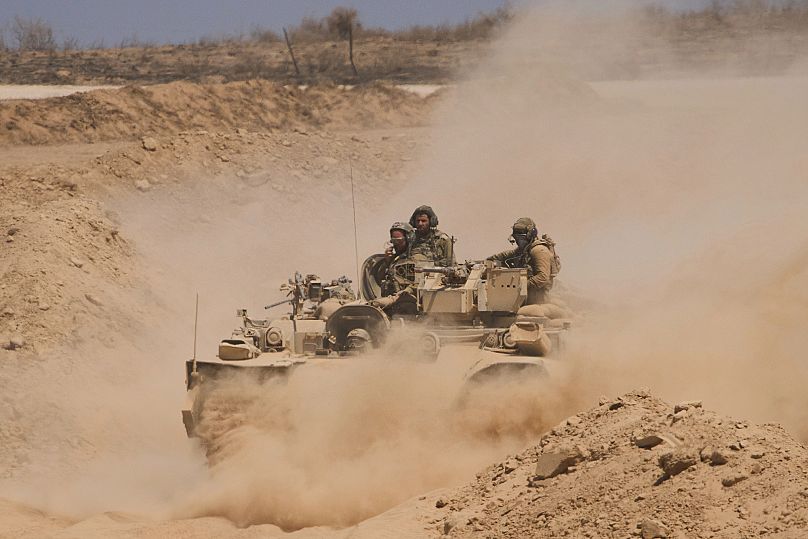
    Israeli soldiers drive on their armoured personnel carrier back from inside the northern Gaza Strip into southern Israel, 29 July, 2025

    Picture‑Perfect Journey: From Gaza to the Heart of Israel

    On September 29th, 2025, a convoy of Israeli soldiers loaded onto an armoured personnel carrier (APC) made a strategic hop from the northern Gaza Strip all the way back into southern Israel.

    What the photo shows

    • Intrepid soldiers in full gear, riding the tough‑denied terrain.
    • The APC—rock‑solid, no‑frills, and ready to roll through any rough patch.
    • A clear line of sight: the desert landscape stretching from Gaza to the southern front.

    Why it matters

    This snapshot captures a crucial moment in the military choreography, reminding everyone that moving from conflict zones back to secured territories is both a tactical necessity and an almost cinematic feat.

    Falling sales

    European Nations Tighten Their Grip on Arms Sales to Israel

    While countries like Belgium, Italy and the Netherlands haven’t gone as far as Slovenia in cutting off weapons flow to Israel, they’ve still taken meaningful steps to curb the trade.

    Country‑by‑Country Snapshot

    • Belgium: After the 2008‑2009 Gaza war, Belgium officially banned all arms exports to Israel. It’s a pretty firm stance that’s been on the books for years now.
    • Netherlands: The Court of Appeal in The Hague blocked a deal in February 2024 that would have shipped F‑35 spare parts to Israel. A court win that keeps the Dutch flag higher when it comes to weapon exports.
    • Italy: Though less dramatic, Italy’s restrictions reflect a broader European push to limit arms going to the region.

    The Legal Framework That Keeps the Knuckles Locked Down

    Two big international agreements give us a clear blueprint:

    1. 2013 Arms Trade Treaty – says you can’t transfer weapons that will be used to commit genocide or crimes against humanity. It’s a moral & legal red line.
    2. 2008 EU Covenant – commits European states to refuse tech and gear that could help extend armed conflicts. Think of it as a “no‑Gaza‑spare parts” guarantee.
    On the Floor – A Quick Audio‑Clip from a European Think‑Tank

    Samuel Longuet (researcher, GRIP) told Euronews that European governments have a duty not just to block any gear that could fuel crimes, but also to thwart the tools that underpin Israel’s occupation of Palestinian territories. “When you look at it, it’s almost the entire arsenal the Israeli army might use,” he explained.

    Bottom Line – It’s a Whole‑New Reality for European Arms Exporters

    Across the board, European states are tightening their export cabinets, ensuring that weapons no longer serve as a silent accomplice in conflicts where international law is bent to the point of rawer complexity.

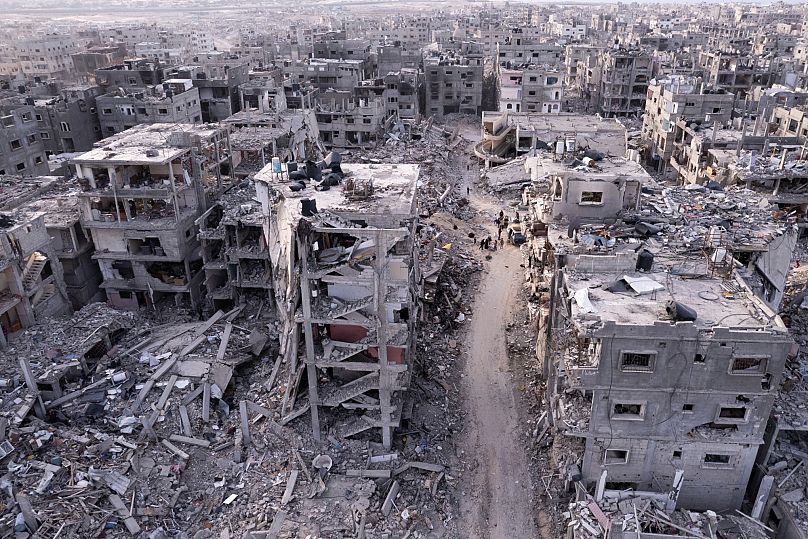
    An aerial photograph taken by a drone shows the destruction caused by the Israeli air and ground offensive in Rafah, 24 January, 2025

    Rafah Aftermath: A Drone’s Survival Story

    On the morning of 24 January 2025, a tiny, agile drone buzzed over the chaotic streets of Rafah, capturing the eye‑poking devastation that followed the combined air and ground assault. The photo, snapped by an all‑seeing aerial eye, gives a haunting snapshot of broken buildings, smoldering rubble, and the eerie quiet that lingers after the thunder of war.

    What the Lens Sees

    • Destroyed structures – once‑proud homes now look like card‑board forts.
    • Streaks of smoke – a hint of hope that fire has long since lost its rhyme.
    • Silent corners – empty streets that buzz only with the wind.

    Behind the Scene

    While the drone did its job, the townsfolk whisper that the real photographer is destiny, scribbling stories in dust and ash. AP Photo captured this dramatic moment, reminding us that every headline has a backdrop of human resilience.

    Continued exports

    European Arms Glow-up Continues

    In a twist that feels like a plot from a geopolitical sitcom, Europe keeps shipping military gear to Israel—and it’s a rollercoaster.

    Breaking the Curtain: Where Are These Parts Going?

    • Some nations claim the parts are merely assembled in Israel or used for flight training, not for combat in Gaza. It’s like saying the recipe is for soup when it’s actually for steak.
    • Italian human‑rights NGOs and investigative journalists have unearthed a secret overtime—the Italian government halted new export licenses, but all pre‑10/7 shipments keep rolling into Israel.
    • In particular, they’re shipping training aircraft parts—the kind of bits that look great on a plane but could become weapons if someone gets, well, creative.

    The Dual‑Use Dilemma

    When a gadget can be used as a toaster and a turbine, it’s safe to say it’s a dual‑use tango. The line blurs between “civilian” and “military,” and that’s a slippery slope for international relations.

    Why It Matters

    Even if you think it’s harmless, the potential misuse of dual‑use tech is a ticking bomb. It’s a reminder that geopolitical decisions aren’t just paper‑trail headaches—they’re real‑world realities.

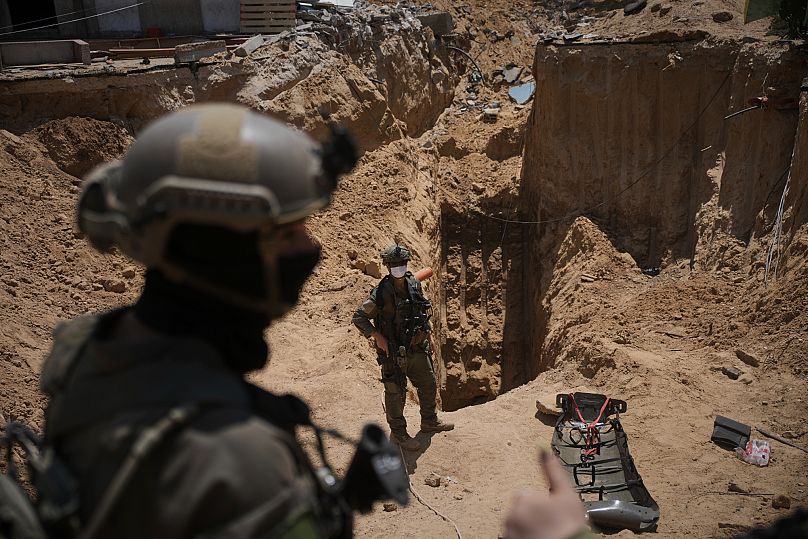
    Israeli soldiers stand next to an entrance of a tunnel under the European Hospital in Khan Younis in southern Gaza, 8 June, 2025

    Belgium’s “Screen‑Swap” Sparks a Scrutiny Storm

    Picture this: a little Belgian factory hand‑crafting glossy panels that, a few months ago, slipped into Israeli drone control cabins—and later, helped fire a humanitarian convoy. In March 2023, the Flemish government sighed, “It’s just a generic screen, not a tank‑drive, so no export licence needed.”

    Why It’s the “Not‑So‑Secret” Tech

    • Generic, you see: The screens can fit in a drone or even a toaster—if you’re into tech foolery.
    • No licence required: Since it’s “just a screen,” the shipping paperwork was waived.

    Fast‑forward to October 2025: the world—especially the U.S.; which hijacks roughly two‑thirds of Israel’s arms haul—starts to stir. Germany and Italy A.F.—shifting from frigates to training jets—also stack into the pot.

    “We Export Everything” – the German Voice

    Longuet from the German Ministry of Defence summed it up: “We ship parts for naval systems AND training aircraft. Think of it as a walk‑and‑talk break in the supply chain.” One more fancy note: Italy exports parts for the M‑346 aircraft that trains future Israeli dogfliers.

    Could the EU Throw a Full Blown Embargo?

    Uncertain. The EU would need a unanimous vote from its Council. Yet, a few pro‑Israel allies—Germany, Hungary, the Czech Republic—might hold a veto.

    Bottom Line

    What started as a “generic screen” story blooms into a complex web of defense exports, international politics, and a sprinkle of unintentional hilarity. The key takeaway: sometimes, the most mundane tech gets tangled in global drama.

  • 2300-Year-Old Ice Mummy Reveals Astonishing Ancient Tattoo Masterpiece in Groundbreaking Discovery

    The Ancient Mummy’s Artsy Portfolio

    Scientists Turned on the Infrared X‑Ray to Unveil a Whimsical, 2300‑Year‑Old Canvas

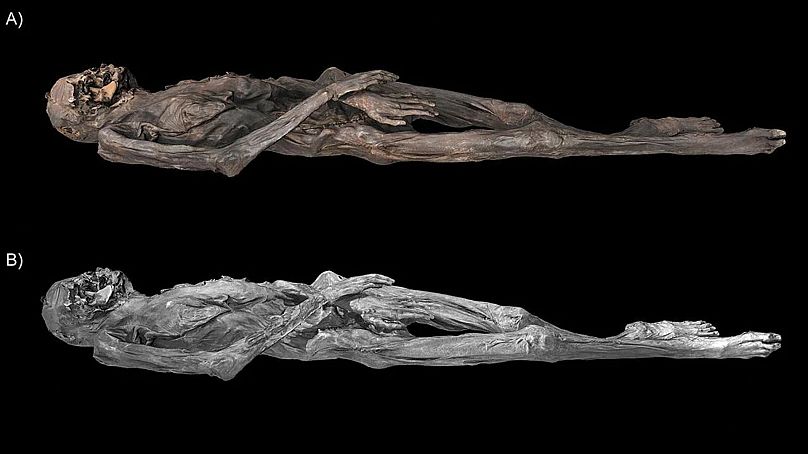
    Picture this: a 2300‑year‑old Siberian mummy still holding a makeup brush in its hand, delicately “hand‑poking” tiger, griffin, and miniature rooster designs onto its body. Thanks to the playful power of near‑infrared imaging, researchers have uncovered these time‑trapped doodles—proof that even prehistoric people had artistic flair that would impress a modern Instagramming cohort.

    • Tiger – a sleek streak of athletic grace, perhaps hinting at fierce protection even in death.
    • Griffin – the mythical half‑lion, half‑eagle that merges strength and flight, a nod to mythical storytelling.
    • Miniature Rooster – the tiny crown‑bearing bird, perhaps a metaphor for “rise and shine” before the big reboot of eternal rest.

    When the infrared light glistens over the mummy’s skin, these patterns emerge like giant crayon fingerprints, giving us a deliciously innocent peek into the artistic life of a once‑vibrant soul. If the mummy could boast, “I’ve got the art for the ages!” would surely pop up in its hidden, smoky‑eyeliner eyes.

    Rugged Mummy, Rugged Art: Siberian Tattoos Re‑claimed by Tech & Talent

    Picture a frozen grave in the heart of the Siberian Altai Mountains—an ancient woman, over two millennia old, entombed in permafrost. For ages, scholars assumed any finger‑painted designs on her skin had simply long since vanished under the harsh cold. Fast forward to today, and cutting‑edge near‑infrared imaging has breathed visible life into those long‑forgotten “inked” stories.

    Science Gets the Spotting Game On

    “We learned that these mummies boasted tattoos,” says Dr. Gino Caspari, fellow at the Max‑Planck Institute and University of Bern. “But their skins were so dark and wrinkled that the ink hid from our eyes.”

    Caspari and his crew didn’t give up. They pressed their cameras to the unseen wavelengths—essentially, a beauty filter a thousand steps ahead of ours. The result? A dazzling kaleidoscope of animals, mythical beasts, and intricate patterns that simply glow when viewed off‑band.

    What Did They Find?

    • Foxes, Bears, and Yaks: Traditional Siberian wildlife rendered in bold strokes.
    • Mythical Creatures: Emblems of spirits and legends the ancients revered.
    • Geometric Drifts: Repeating patterns that hint at rituals, protection, or storytelling.

    It’s almost as if the body became a canvas for a woman who, centuries ago, had no smartphone to post her latest “influencer” look—just a permafrost shrine for her ancestors to glimpse.

    Why It Matters

    These findings underscore that artifacts are not static. The combination of a perfect chill lock and modern imaging turns hidden body art into a living narrative. It reminds archaeologists that sometimes the best way to read history is by turning up the light beyond what our eyes can see.

    And if you thought ancient tattooing was a relic of leisurely bath time, think again. In Siberia’s icy vault, a woman’s skin whispers a story of craftsmanship, mysticism, and survival—ready for all of us to gawk at, next‑door, from the comfort of our living rooms.

    Infrared light reveals an ancient tattoo and a postmortem suture

    Shedding Light on the Cold‑Clothed Past: A Tattoo, a Stitch, and an Ancient Nomad

    A Strobe in the Snowy Soil

    In the chill‑spun Altai Mountains—where Siberia, Kazakhstan, and China throw a wild joint — researchers bounced a beam of infrared light off an old grave that’s been chilling for thousands of years. They discovered not just a mummy, but a fancy ancient tattoo and a post‑mortem surgical stitch that’s almost as cool as the climate.

    The Pazyryk: High‑Altitude Herding Heroes

    Long before GPS, the Pazyryk roamed from the 6th to the 2nd centuries B.C.E. as the original “merry-go-round” crew.

    • Web of steeds and sheep crisscrossing the highlands during the steamy summer.
    • Mortuary practices: burying their dead right where the snow froze the flesh—turning the earth into a cryogenic vault that lasts millennia.

    What the Infrared Reveal Means

    This isn’t just another “old body” story. Think of it like a secret Instagram profile photo for the past:

    • + Old‑school graffiti etched into skin—what’s a 2000‑year‑old person dancing on their own canvas?
    • + In‑depth rescue science (the stitch) that shows early medical practices may have been more advanced than we thought.
    • + Unexpected lifestyle diary — the body’s condition tells us they were probably hardy, traveling under the mountain sun.

    So next time you walk through a modern privacy setting, remember: some folks had already stepped into the underground vault that sealed their secrets… until the right light came in and the story unfolded again.

    What tattoos were found on the mummy?

    Unearthing a Body‑Painting Treasure Trove

    Picture this: a team armed with cutting‑edge imaging tech and a tattoo artist who knows their brush strokes has unearthed a stunning, skin‑deep gallery on a woman’s body. Think of a living canvas where every inch tells a story, and the stories are wild.

    So, What’s on Her Skin?

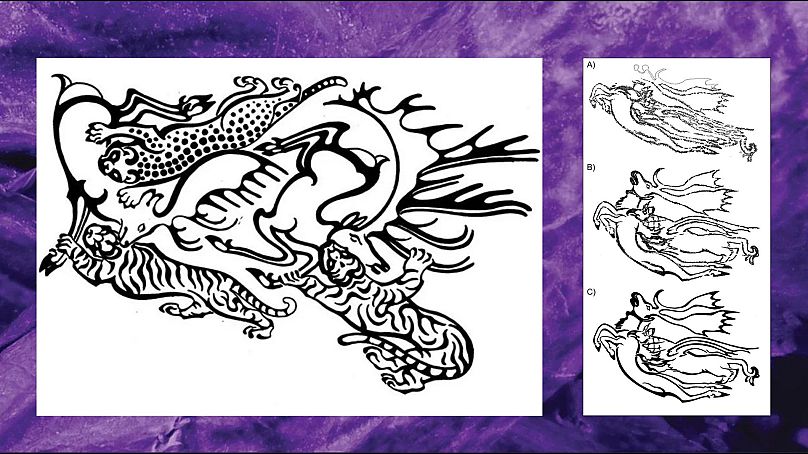
    • Vivid hunting scenes – tigers and leopards pouncing on deer, sometimes even on reindeer‑like creatures that look like a cross between a mythical beast and a tiny butt of an alpine goat.
    • A mythical griffin in mid‑flight, swooping down to tackle a herbivore in a dramatic showdown that would make a mythical epic blush.
    • The crown jewels: her thumbs, adorned with tiny rooster‑like motifs. Why roosters? Magic, perhaps, or a secret nod to the sunrise.

    Aesthetic That’s One‑of‑a‑Kind

    According to Dr. Gino Caspari, these images are “fantastic” and as bright as a neon sign in a midnight oval — they’re extremely vivid, and they represent a unique art style that’s nowhere else in the world. In other words, they’re as rare as a unicorn that can do your taxes.

    All in All

    From wild animal duels to mythical creatures to charming rooster doodles, this skin‑painting saga proves art knows no bounds — whether scratched onto canvas or peeled directly onto flesh. It’s a reminder that creativity can be everywhere, even on the most unexpected surfaces.

    Various tattoo designs uncovered on the mummy's body

    Unraveling the Ancient Graffiti: Tattoos Tucked on a Timeless Tomb

    What We Just Caught on the Mummy’s Skin

    Turns out, our ancient ancestors weren’t just flat‑fee pharaohs and mighty warriors—they were also ink aficionados. Archaeologists have uncovered a whole palette of tattoo designs on the mummy’s body, and trust me, these old‑school tats are doing more than just making a statement; they’re telling an entire story, one epic bold line at a time.

    Designs That Dazzle and Detangle

    • Symbolic Singlets: geometric shapes that probably functioned like ancient ID cards.
    • Animal Calls: stylized scorpions, snakes, and feathered pharaohs—nature’s own branding.
    • Cosmic Curves: swirling patterns that hint at early GPS coordinates—what’s their map, if any?
    • Heroic Hatchings: minimalistic line art that could be early action‑movie posters.
    • Mystery Mosaics: repeating motifs that might be early 3D printing prototypes.

    Why These Paintings Matter

    Each stroke carries whispers of ancient rituals, beliefs, and even life dates. Think of these tattoos as a group chat from 3500 B.C.—everyone’s sharing stories, icons, and probably a corner for selfies (yes, they dared!)—all painted right onto skin.

    What Might They Reveal?

    Researchers believe the art signifies social status and spiritual teachings. A simple swirl could be a love note; an elaborate design might have spelled out an entire myth. Scientists are comparing these patterns to modern tattoos to see if humans always try to “paint a name” on their flesh.

    Getting the Credit Where It Belongs

    Shout out to the brilliant eyes behind the discovery: Daniel Riday, Caspar, M. Vavulin, and the historian squad at Antiquity—your work paints a vivid picture of the past.

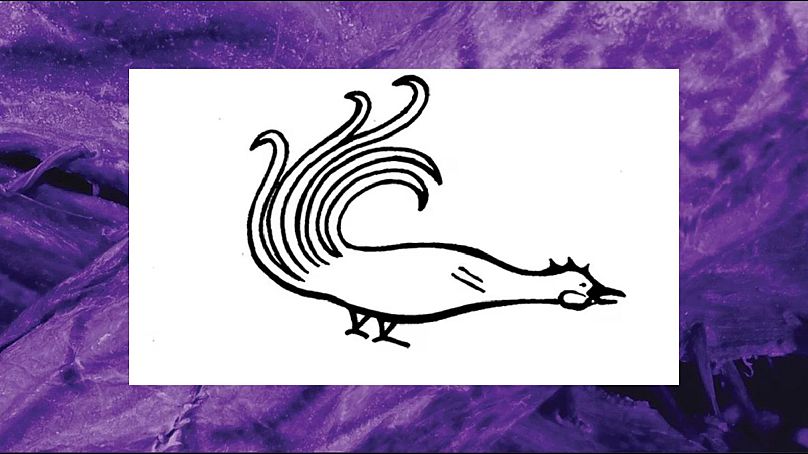
    An illustration of a rooster tattoo found on the woman's thumb and fingers

    Modern Tech Meets Ancient Ink: The Tale of Pazyryk Hoverclaw Tattoos

    Picture a sharp, proud rooster nailing the thumb and fingers of a woman—just like a tiny, prehistoric badge of honor. The photos are so crisp you could almost feel the legendary feather pattern.

    Why These Images Are Making Scholars Rattle Their Boots

    • Colorful as a henhouse festival, the artwork pops right off the parchment, a visual scream that’s totally one‑of‑a‑kind.
    • But the deeper meaning? Silenced by time. No diaries from the Pazyryk folks to decode the mystique.
    • Roman scholar A… Caspari dives back into the how rather than the why, tracing the skill behind every feathered flourish.

    Stitching vs. Piercing: A Little Skiglu‑Style Debate

    Some people have suggested that back in the icy north, ancient artists used thread‑based tattooing—think of it as a tattoo‑rope delivering pigment through the dermis. That’s cool, but Caspari’s crew found it’s all about the puncture.

    “We’ve got solid proof,” Caspari says. “They used needles, no electricity. They just poked—just like a tattooist today, plain and simple.

    The Lingerie of the Ink: A Sequential Montage

    When the team scrubbed the walls, they saw the ink come in waves.

    • They stopped mid‑stroke—a breath to grab more color.
    • Lines had tiny variations—just a little shift in the eye that shows the artist was pausing and picking up where they left off.

    These pauses are a mouth‑watering detail that brings the whole process into feel‑good real life: you almost hear the click of the needle and the sigh it sounds when it stops to refuel.

    Bottom Line

    Think of the ancient Pazyryk tattooists as the ultimate DIY Instagram influencers: they’re working hard, taking smart breaks, using simple tech, and, of course, making art that will give your thumb that wow factor for centuries.

    Several ice mummies discovered in the Altai Mountains are now housed at the Hermitage Museum in Russia.

    Ice‑Frozen Secrets: The Mysterious Tattoos of Altai’s Mummies

    Guess what? Even the ancient people of the Altai Mountains had the urge to show off their ink! Eight newly discovered ice mummies, now hanging out at Russia’s Hermitage Museum, come with a twist: they’re all tattooed.

    From the Cold Vault of the Pazyryk Realm

    • Not just the nobles. The old idea that only elites got tattooed is out the window.
    • Stylish and skillful. These designs aren’t doodles—think intricate patterns that demanded serious artistry.
    • Every mummy wears ink. The sample so far shows all preserved specimens carry visible markings.

    Dr. Gino Caspari’s Big Dream

    “We’re fishing for a full, public record of Pazyryk mummy tattoos,” Caspari says. “Think glossy, high‑def illustrations rather than grainy black‑and‑white shots.” Only then can we truly grasp the techniques and tools the ancient artists used.

    He’s not just going to tuck the data away in a dusty vault. “Because people are buzzing about it, the public deserves to see, learn, and maybe even get inspired,” he adds.

    Want More?

    Catch the video linked above to dive deeper into the visuals and hear Caspari spill the details in his own words.

  • Kazakhstan Unveils Central Asia’s Most Powerful Supercomputer to Launch an AI Revolution

    The Real Deal: Why Kazakhstan Needs Its Own Game Plan

    Picture a world where every nation just copies the playbook of the smartest neighbour. Feels a bit like a karaoke club where everyone sings the same tune—lacking originality and, frankly, a touch of excitement. That’s the thought buzzing around in Kazakhstan’s halls of power: without its own local solutions and freshly beefed-up infrastructure, no country, not even ours, could claim to be truly successful or genuinely sovereign.

    Why My Own Checklist Matters

    • Seamless Supply Chains: Relying on foreign logistics is like ordering pizza from a place you’ve never tried—never do you know how fresh the dough will be.
    • Tailored Tech: Imagine building a smartphone in a country whose language or culture demands a different user interface—no one wants an app that’s just a copy-paste of Google.
    • Financial Independence: Buying cash, not just borrowing it, keeps the purse strings tight and the future not bound by external whims.
    • Boosted Creativity: When people lay the groundwork of innovation, they become the superheroes of the next generation—not just a side‑kick.

    How the Kazakh Dream Plays Out

    Every policymaker and expert in the country is humming a chorus: “Build it locally, keep it local.” They point out that a fourth‑generation sustainable infrastructure—think solar farms, river‑powered turbines, and a digital network that doesn’t need a patching guide—illustrates independence. And if you’re just improvising, you’re likely to be blocked by global supply shortages or rising tariffs.

    Why This Matters to All of Us

    Believe it or not, the road to becoming a “maximum sovereign” world leader starts with a simple principle: a local, practical solution for something that is inherently high‑speed, high‑energy. And when Kazakhstan (and any other aspiring nation) puts that to work, the rest of the world might just watch, nod, and finally understand that this is the only small way you stick to a plan that will pay off in the long run.

    Kazakhstan Unveils the Most Powerful Supercomputer in Central Asia – A Big Leap into AI Wonderland!

    From Hot‑Tech Hype to Everyday Life: What’s on the Gigahertz Menu?

    In a splashy ceremony that felt like a techno‑fairytale, Kazakhstan rolled out a supercomputer that can crunch ~2 exaflops per second – that’s two quintillion calculations every single second. The magic machine sits at the Alem.cloud center in Astana and promises to turbo‑charge the nation’s e‑government and blazingly fast AI models.

    Why the Big Bang? Two Core Kicks:

    • Digital Mayhem for Citizens and Businesses – A new level of speed for e‑government tools that the people are already loving.
    • AI Powerhouse – Sharpening deep‑learning engines for the next wave of smart services.

    President Kassym‑Jomart Tokayev hit the green button to bring the beast online. He’s been the super‑computer’s biggest fan, and the entire country’s AI push is basically his “pet” project. He even rolled out a “Concept of AI Development until 2029” that dreams of Kazakhstan standing shoulder‑to‑shoulder with the globe’s AI superstars in just four years.

    At the ribbon‑cutting, he called it a “crucial step in digitalizing key industry and science arenas,” saying it will pave the way for fresh tech and handy daily solutions.

    Word on the Street: A “New Face” for Kazakhstan?

    Senior Expert Boris Potapchuk at Nazarbayev University highlighted that the supercomputer will give Kazakhstan a shiny new image on the world stage – a place that’s all about cutting‑edge tech and knows what it’s doing.

    He also noted that the AI cluster can funnel scattered citizen info into a single, safer hub, making data more accessible and reliable. That’s especially handy after last month’s massive data breach that might have exposed the personal details of 16 million people.

    The Ministry of Digital Development is on it, investigating the leak of names, ID numbers, birthdates, addresses and phone numbers that slipped out from private databases.

    Achievements, Yet There’s More Work…
    • 92% of public services digitized since 2004 – the leading edge of e‑government in the region.
    • Only 8 out of 20 million citizens have a digital signature, but the trend is climbing fast.
    • Kazakhstan ranks #24 out of 193 in the UN E‑Government Development Index (EGDI).

    But the real spotlight is on AI. In 2024, a draft law on AI got the green light, and a dedicated Committee on AI was set up to steer the field.

    Why It Matters – The “Brain Drain” Factor

    All the tech excitement may be dampened if talented locals leave for richer opportunities overseas. Without their own localised solutions and a robust infrastructure, any country’s future tech game could stall.

    So, the big question: Will Kazakhstan’s new supercomputer keep the bright minds at home and blow the competition out of the water?

    AI’s language problem

    Astana’s Supercomputer: The New Powerhouse of Kazakh Innovation

    Picture a gigantic brain parked in a high‑security Tier III data centre, humming quietly beneath the Kazakh skies. That’s Astana – a supercomputer that’s not just a machine, but a hub for learning, experimentation, and cutting‑edge research.

    Why Astana Matters

    • Experts get hands‑on training in cooling, stabilising, detecting problems, fixing glitches, and safeguarding against cyber threats.
    • Show‑stoppers on debut: a Kazakh language AI model (AlemLLM), a system that spots forest fires before they flare, and breakthrough tools for medicine, construction, and education.

    From A Language to a Lifestyle

    In a world where Western tech dominates, there’s a real fear that local tongues might fade. AI experts warned of an extinction risk for non‑Western languages. Kazakhstan took a bold step: it poured resources into a dedicated Kazakh LLM, ensuring the native voice stays loud and clear.

    Already, six supercomputers spread across Kazakh universities power research and AI development. Astana is the latest addition to the squad.

    Words from the Trailblazers

    Waqar Ahmad, President of Nazarbayev University, says:

    “The prime reason for building this supercomputer is to take KazLLM to the next level. We’ll need even more horsepower to keep pushing that boundary. The original KazLLM was mainly text‑based, but now we’re layering in voice recognition, image processing, and the future of full‑spectrum models—text, sound, and visual—all dancing together.”

    His colleague Boris Potapchuk feels a bit cautious:

    “Feasibility studies point toward it being mostly a platform for running existing models rather than training brand‑new ones. The leap into new AI solutions is big, but it also brings big questions—and some nagging weaknesses.”

    Looking Ahead

    With names like AlemLLM and early forest‑fire detection already putting Kazakhstan on the global map, the future looks bright—and energised. Astana isn’t just a machine; it’s a beacon for a nation eager to claim its place in the AI universe.

    The brain drain

    “We need to understand that a supercomputer of this kind requires constant modernisation and programming maintenance, and this is something that can only be entrusted with the highest profile specialists,” he said.
    “If we’re honest, Kazakhstan faces serious problems in this respect. It is not a secret that we face a big brain drain in all the fields of expertise, IT specialists leading the way. This is why Kazakhstan needs to attract and train its own experts as well as provide timely updating and modernisation of software and program code”. 
    But he noted that bearing in mind that “the state secrets confidential citizens’ information will be stored on this computer, foreign experts will not be allowed, just like we don’t allow them in the oil and gas industry or logistics,” said Potapchuk.

    Related

    World Wide Web creator Sir Tim Berners-Lee’s hopes for 2025: Data rights and a social media backlash

    But it is exactly this computer that is the pre-requisite for such training (although with limited access to data for the trainees) and the government insists that the launch of the first super-computer in he country is the most important, first step on a thousand-mile journey.
    The Minister in charge of digital transformation Zhaslan Madiyev, said that there is no doubt that digital development is already as crucial for national sovereignty as energy or food security is.
    “The launch of the national super-computer centre is a strategic step in the development of the technological sovereignty of the country. We are creating the conditions for the development of the AI eco-system that will be able to compete on the global level,” said Madiyev.

  • Celebrity Weddings of 2025: Stars Who Got Married This Year

    Celebrity Weddings of 2025: Stars Who Got Married This Year

    Love is in the air! Celebrity couples have wasted no time walking down the aisle in 2025.

    February began with 90 Day Fiancé star Veah Netherton confirming a report that she had married her dog sitter after splitting from ex Sunny Mahdi.

    window.firework_player_src = ‘//asset.fwcdn3.com/js/storyblock.js’;
    window.split_percentage = 0;

    Former Bachelorette Katie Thurston also joined the list after tying the knot with comedian Jeff Arcuri on March 22 amid her cancer battle. Stranger Things star Brett Gelman revealed on April 2 that he married musician Ari Dayan 10 months earlier in a festive Italian wedding.
    Kristen Stewart and Dylan Meyer also exchanged vows in Los Angeles on April 20.
    One month later, Demi Lovato and husband Jordan “Jutes” Lutes said “I Dd” in California on May 25.

    {“@context”:”https:\/\/schema.org”,”@type”:”ImageGallery”,”description”:””,”image”:[{“@type”:”ImageObject”,”datePublished”:”2025-05-27T12:45:44-04:00″,”caption”:”Demi Lovato and Jordan \u201cJutes\u201d Lutes quietly tied the knot in California alongside their close family and friends on May 25.\n\n “,”url”:”https:\/\/www.intouchweekly.com\/wp-content\/uploads\/2025\/05\/GettyImages-2171635168-demi-lovato-married.jpg?resize=1200%2C1200&quality=86&strip=all”,”width”:”1200″,”height”:”1200″},{“@type”:”ImageObject”,”datePublished”:”2025-05-02T17:50:37-04:00″,”caption”:”Weston Cage Coppola, the son of Nicolas Cage and his ex-girlfriend Christina Fulton, tied the knot with fianc\u00e9e Jenifer Alexa Canter at The London West Hollywood in Beverly Hills on April 25. The actor and recording artist shared photos from their big day on his Instagram on May 2.\n\n\u201cI am ineffably honored to announce that I am married to my twin flame just as the creator intended all along. I love you @_babyjen_ more than any man has ever loved,\u201d Weston wrote. \u201cWhat was meant to be shall forever be and I will always protect you and our incontrovertibly God-given marriage by any means necessary. This is the greatest miracle of my existence as I see the reason I was born and divinity itself every time I look into your astronomically beautiful eyes.\u201d”,”url”:”https:\/\/www.intouchweekly.com\/wp-content\/uploads\/2025\/04\/weston-cage-jenifer-wedding.jpg?resize=1200%2C902&quality=86&strip=all”,”width”:”1200″,”height”:”1200″},{“@type”:”ImageObject”,”datePublished”:”2025-04-29T16:22:58-04:00″,”caption”:”Teen Mom alum Javi Marroquin married Lauren Comeau in an intimate beach ceremony on April 24. The reality star confirmed the happy news by sharing a photo from their special day via Instagram on April 27. The following day, Lauren shared a few details about the nuptials on her Instagram Stories.\n\n\u201cOnly my dad, our kids and our pastor were there,\u201d she wrote. \u201cThe trip with my dad was planned before the wedding, and it\u2019s a trip we do annually with him.\u201d\n\nLauren added that she and Javi are planning another ceremony for the summer so that additional friends and family can celebrate their marriage. \u201cWe wanted it to be something special for the boys and something intimate for our family and for my dad to walk me down the aisle,\u201d she noted.”,”url”:”https:\/\/www.intouchweekly.com\/wp-content\/uploads\/2025\/04\/javi-lauren-married-2.jpg?resize=1080%2C1080&quality=86&strip=all”,”width”:”1200″,”height”:”1200″},{“@type”:”ImageObject”,”datePublished”:”2025-04-21T17:04:54-04:00″,”caption”:”Kristen Stewart and Dylan Meyer, who went public with their romance in 2019 and announced their engagement two years later, made it official on April 20, 2025.\n\nThe lovebirds got married at home in front of their closest pals and family members, including Ashley Benson and husband Brandon Davis, after obtaining a courthouse marriage license.”,”url”:”https:\/\/www.intouchweekly.com\/wp-content\/uploads\/2025\/04\/kristen-stewart-wedding-slide.jpg?resize=1200%2C1200&quality=86&strip=all”,”width”:”1200″,”height”:”1200″},{“@type”:”ImageObject”,”datePublished”:”2025-04-03T12:50:40-04:00″,”caption”:”Actor Brett Gelman and musician Ari Dayan revealed on April 2 that they married in June 2024.\n\nThe Stranger Things star shared an Instagram post with photos from their wedding at Villa Lena in Tuscany, Italy.\n\nBrett wrote in the caption, \”The greatest weekend of our lives with the greatest people we know. WE\u2019RE MARRIED!!! Thank you to our family and friends for showering us in so much love and making our wedding weekend what it was.\”\n\nBrett and Ari began dating in 2019 and got engaged in April 2023.”,”url”:”https:\/\/www.intouchweekly.com\/wp-content\/uploads\/2025\/03\/celebrity-weddings-2025-1.jpg?crop=0px%2C161px%2C3406px%2C3406px&resize=1200%2C1200&quality=86&strip=all”,”width”:”1200″,”height”:”1200″},{“@type”:”ImageObject”,”datePublished”:”2025-04-03T12:54:42-04:00″,”caption”:”Actor Brett Gelman and musician Ari Dayan revealed on April 2 that they married in June 2024.\n\nThe Stranger Things star shared an Instagram post with photos from their wedding at Villa Lena in Tuscany, Italy. Brett wrote in the caption, \”The greatest weekend of our lives with the greatest people we know. WE\u2019RE MARRIED!!! Thank you to our family and friends for showering us in so much love and making our wedding weekend what it was.\”\n\nBrett and Ari began dating in 2019 and got engaged in April 2023.”,”url”:”https:\/\/www.intouchweekly.com\/wp-content\/uploads\/2025\/03\/celebrity-weddings-2025-1.jpg?crop=0px%2C161px%2C3406px%2C3406px&resize=1200%2C1200&quality=86&strip=all”,”width”:”1200″,”height”:”1200″},{“@type”:”ImageObject”,”datePublished”:”2025-03-24T16:12:28-04:00″,”caption”:”Katie Thurston and Jeff Arcuri made it official during an intimate backyard ceremony in the privacy of their own home on March 22 amid her battle with stage 3 breast cancer.\n\n\u201cYou would think it would cause more tribulation or problems between you, but it\u2019s bonded us more than anything else, which is why we\u2019re moving up the wedding a little bit. \u2026 We\u2019re getting married in two days,\u201d he sweetly told Us Weekly prior to their nuptials.”,”url”:”https:\/\/www.intouchweekly.com\/wp-content\/uploads\/2025\/03\/katie-thurston-with-husband.jpg?resize=1200%2C1200&quality=86&strip=all”,”width”:”1200″,”height”:”1200″},{“@type”:”ImageObject”,”datePublished”:”2025-03-19T17:21:06-04:00″,”caption”:”Jonathan Majors revealed he and fianc\u00e9e Megan Good had secretly tied the knot the day prior during his\u00a0March 19 appearance on the Sherri show.\n\nThe Ant-Man and the Wasp star said his pastor mother officiated their ceremony after flying into Los Angeles to attend a screening of his new film, Magazine Dreams.\n\n\”My mother had never been to one of my screenings, and we had told her, ‘Hey, we’re gonna do this thing.’ And we did,\” he explained. \u00a0\”My mother married us yesterday, her mother was there. And we got these rings, and we got ’em engraved in Hawaii.\”\n\nThe couple began dating in 2023 and confirmed their engagement in November 2024.”,”url”:”https:\/\/www.intouchweekly.com\/wp-content\/uploads\/2025\/03\/celebrity-weddings-2025.jpg?crop=0px%2C367px%2C3928px%2C3928px&resize=1200%2C1200&quality=86&strip=all”,”width”:”1200″,”height”:”1200″},{“@type”:”ImageObject”,”datePublished”:”2025-03-18T13:33:07-04:00″,”caption”:”Justin Theroux and Nicole Brydon Bloom are officially married, sources confirmed to People on March 16. The Beetlejuice Beetlejuice actor and Gilded Age star, who were first linked in February 2023, were spotted celebrating the momentous occasion on a beach in photos obtained by TMZ.”,”url”:”https:\/\/www.intouchweekly.com\/wp-content\/uploads\/2025\/03\/Celebrity-Weddings-of-2025-Justin-Theroux-Nicole-Brydon-and-More-Stars-0000.jpg?crop=480px%2C293px%2C1769px%2C1769px&resize=1200%2C1200&quality=86&strip=all”,”width”:”1200″,”height”:”1200″},{“@type”:”ImageObject”,”datePublished”:”2025-03-07T14:14:56-05:00″,”caption”:”Frank Catania appeared on the March 6 episode of RHONJ star Melissa Gorga\u2019s \u201cOn Display\u201d podcast and announced that he and wife Brittany Mattessich said \u201cI Do\u201d four months prior.\n\nFrank was previously married to RHONJ star Dolores Catania and they currently maintain a close friendship.\n\n\u201cWe are married, but we\u2019re married off the chart,\u201d Frank told Melissa of his wedding with Brittany.\n\n\u201cYou know who married us? David [Principe],\u201d Frank said of Dolores\u2019 ex-boyfriend, who previously appeared on the Bravo show.”,”url”:”https:\/\/www.intouchweekly.com\/wp-content\/uploads\/2025\/03\/frank-4.jpg?resize=1080%2C1200&quality=86&strip=all”,”width”:”1200″,”height”:”1200″},{“@type”:”ImageObject”,”datePublished”:”2025-03-05T14:58:54-05:00″,”caption”:”The Bachelorette season 19 star Gabby Windey married girlfriend Robby Hoffman in an intimate Las Vegas ceremony, the reality star revealed on March 5.\n\n\”Husband and wife!! 1\/11\/2025,\” Gabby captioned a series of photos from their wedding, revealing that the big day had happened nearly two months prior.\n\nThe ABC star announced she was dating the comedian in August 2023, sharing an Instagram post showing loved-up photos of the couple with the caption, \”Told you I\u2019m a girl\u2019s girl!!\””,”url”:”https:\/\/www.intouchweekly.com\/wp-content\/uploads\/2025\/03\/Which-Celebrities-Got-Married-in-2025-Star-Weddings.jpg?crop=0px%2C255px%2C1440px%2C1440px&resize=1200%2C1200&quality=86&strip=all”,”width”:”1200″,”height”:”1200″},{“@type”:”ImageObject”,”datePublished”:”2025-02-24T12:20:06-05:00″,”caption”:”Welcome to Plathville star Lydia Plath married fianc\u00e9 Zac Wyse on February 22 in a beautiful blue-themed ceremony on her family\u2019s farm in Georgia, People reported the following day. The couple shared their first kiss at the altar in front of 115 guests, with Lydia wearing a gorgeous white lacy and flowy gown.\n\n\u201cThis day couldn\u2019t have happened without everyone who just gave so much, and I\u2019ve been blown away by the beauty of it all. It was so much better than I could ever have imagined,\u201d Lydia told the outlet.\n\nZac added, \u201cIt was nothing short of a miracle how this day came together.\u201d”,”url”:”https:\/\/www.intouchweekly.com\/wp-content\/uploads\/2025\/02\/zac-lydia-IT-1.jpg?resize=1024%2C1200&quality=86&strip=all”,”width”:”1200″,”height”:”1200″},{“@type”:”ImageObject”,”datePublished”:”2025-02-04T16:36:04-05:00″,”caption”:”90 Day Fianc\u00e9: Before the 90 Days season 7 star Veah Netherton confirmed her marriage to her dog sitter on February 3 when she shared a report about her wedding from 90 Day Fianc\u00e9 blogger Alexa Pomegranate.\n\n\u201cTurns out that Veah married her dog sitter. But wait \u2013 he\u2019s not just a dog sitter. He\u2019s also part time in the military and a policeman,\u201d the post read.\n\nThe post also teased that fans would see her husband on reality TV. \u201cHe\u2019s been an amazing partner, helping Veah through her hardest struggles with her health,\u201d the report noted.\n\nIn her caption, Veah simply added, \u201cGrateful.\u201d\n\nVeah\u2019s marriage comes after her split from ex Sunny Mahdi, with whom she appeared on Before the 90 Days.”,”url”:”https:\/\/www.intouchweekly.com\/wp-content\/uploads\/2025\/02\/Celebrity-Weddings-of-2025-Stars-Who-Got-Married-This-Year-1.png?resize=1200%2C1200&quality=86&strip=all”,”width”:”1200″,”height”:”1200″},{“@type”:”ImageObject”,”datePublished”:”2025-02-04T16:36:04-05:00″,”caption”:”Bachelor Nation\u2019s Brayden Bowers and Christina Mandrell announced their elopement on January 21, one year after the couple got engaged during The Golden Bachelor\u2019s live Golden Wedding special.\n\n\u201cWe just got a marriage license. Nobody knows!\u201d Brayden said in a Bachelor Nation YouTube video titled \u201cBrayden Bowers & Christina Mandrell\u2019s OFFICIAL Wedding Video.\u201d\n\nThe couple revealed that they secretly got married on December 12, 2024, and showed off their wedding spot \u2014 a gazebo adorned with red ribbons overlooking a lake.”,”url”:”https:\/\/www.intouchweekly.com\/wp-content\/uploads\/2025\/02\/Celebrity-Weddings-of-2025-Stars-Who-Got-Married-This-Year-2.jpg?resize=1200%2C1200&quality=86&strip=all”,”width”:”1200″,”height”:”1200″},{“@type”:”ImageObject”,”datePublished”:”2025-02-04T16:36:03-05:00″,”caption”:”The Marvelous Mrs. Maisel alum Michael Zegen and Next to Normal star Jennifer Damiano wed in an intimate ceremony in New York City on January 12, Jennifer announced on Instagram.\n\n\u201cThe Zegens,\u201d she captioned the post, which showed the couple sharing a kiss in their wedding attire on Cornelia St.”,”url”:”https:\/\/www.intouchweekly.com\/wp-content\/uploads\/2025\/02\/Celebrity-Weddings-of-2025-Stars-Who-Got-Married-This-Year-3.jpg?resize=1200%2C1200&quality=86&strip=all”,”width”:”1200″,”height”:”1200″},{“@type”:”ImageObject”,”datePublished”:”2025-02-04T16:36:03-05:00″,”caption”:”Caitlin Hale and Angelo Massagli, who met on the set of the 2003 film School of Rock when they were kids and reconnected years later, tied the knot in early January. The wedding was attended by several of their School of Rock costars, including Maryam Hassan, Rivkah Reyes, Brian Falduto, Joey Gaydos, Jr., Cole Hawkins, Aleisha Allen and Robert Tsa, according to Instagram posts from the event. Caitlin and Angelo\u2019s nuptials came four months after they teased their engagement on social media.”,”url”:”https:\/\/www.intouchweekly.com\/wp-content\/uploads\/2025\/02\/Celebrity-Weddings-of-2025-Stars-Who-Got-Married-This-Year-4.jpg?resize=1200%2C1200&quality=86&strip=all”,”width”:”1200″,”height”:”1200″}]}
    1 of 17Celebrity Weddings of 2025: Stars Who Got Married This YearPhoto by Kevin Winter/Getty Images

    Demi Lovato and Jordan “Jutes” Lutes

    Demi Lovato and Jordan “Jutes” Lutes quietly tied the knot in California alongside their close family and friends on May 25.
     

    2 of 17Celebrity Weddings of 2025: Stars Who Got Married This YearCourtesy Weston Cage/Instagram

    Weston Cage Coppola and Jenifer Alexa Canter

    Weston Cage Coppola, the son of Nicolas Cage and his ex-girlfriend Christina Fulton, tied the knot with fiancée Jenifer Alexa Canter at The London West Hollywood in Beverly Hills on April 25. The actor and recording artist shared photos from their big day on his Instagram on May 2.
    “I am ineffably honored to announce that I am married to my twin flame just as the creator intended all along. I love you @_babyjen_ more than any man has ever loved,” Weston wrote. “What was meant to be shall forever be and I will always protect you and our incontrovertibly God-given marriage by any means necessary. This is the greatest miracle of my existence as I see the reason I was born and divinity itself every time I look into your astronomically beautiful eyes.”

    3 of 17Celebrity Weddings of 2025: Stars Who Got Married This YearInstagram

    Javi Marroquin and Lauren Comeau

    Teen Mom alum Javi Marroquin married Lauren Comeau in an intimate beach ceremony on April 24. The reality star confirmed the happy news by sharing a photo from their special day via Instagram on April 27. The following day, Lauren shared a few details about the nuptials on her Instagram Stories.
    “Only my dad, our kids and our pastor were there,” she wrote. “The trip with my dad was planned before the wedding, and it’s a trip we do annually with him.”
    Lauren added that she and Javi are planning another ceremony for the summer so that additional friends and family can celebrate their marriage. “We wanted it to be something special for the boys and something intimate for our family and for my dad to walk me down the aisle,” she noted.

    4 of 17Celebrity Weddings of 2025: Stars Who Got Married This YearPhoto by Stefanie Keenan/VF22/WireImage for Vanity Fair

    Kristen Stewart and Dylan Meyer

    Kristen Stewart and Dylan Meyer, who went public with their romance in 2019 and announced their engagement two years later, made it official on April 20, 2025.
    The lovebirds got married at home in front of their closest pals and family members, including Ashley Benson and husband Brandon Davis, after obtaining a courthouse marriage license.

    5 of 17Celebrity Weddings of 2025: Stars Who Got Married This YearMonica Schipper/Getty Images for Elton John AIDS Foundation

    Brett Gelman and Ari Dayan

    Actor Brett Gelman and musician Ari Dayan revealed on April 2 that they married in June 2024.
    The Stranger Things star shared an Instagram post with photos from their wedding at Villa Lena in Tuscany, Italy.
    Brett wrote in the caption, “The greatest weekend of our lives with the greatest people we know. WE’RE MARRIED!!! Thank you to our family and friends for showering us in so much love and making our wedding weekend what it was.”
    Brett and Ari began dating in 2019 and got engaged in April 2023.

    6 of 17Celebrity Weddings of 2025: Stars Who Got Married This YearMonica Schipper/Getty Images for Elton John AIDS Foundation

    Brett Gelman and Ari Dayan

    Actor Brett Gelman and musician Ari Dayan revealed on April 2 that they married in June 2024.
    The Stranger Things star shared an Instagram post with photos from their wedding at Villa Lena in Tuscany, Italy. Brett wrote in the caption, “The greatest weekend of our lives with the greatest people we know. WE’RE MARRIED!!! Thank you to our family and friends for showering us in so much love and making our wedding weekend what it was.”
    Brett and Ari began dating in 2019 and got engaged in April 2023.

    7 of 17Celebrity Weddings of 2025: Stars Who Got Married This Year@thekatiethurston/Instagram

    Katie Thurston and Jeff Arcuri

    Katie Thurston and Jeff Arcuri made it official during an intimate backyard ceremony in the privacy of their own home on March 22 amid her battle with stage 3 breast cancer.
    “You would think it would cause more tribulation or problems between you, but it’s bonded us more than anything else, which is why we’re moving up the wedding a little bit. … We’re getting married in two days,” he sweetly told Us Weekly prior to their nuptials.

    8 of 17Amy Sussman/Getty Images

    Melissa Rivers and Steve Mitchel

    Melissa Rivers and Steve Mitchel officially became husband and wife on March 15. The pair tied the knot in front of 150 guests in a gorgeous ceremony at the Four Seasons in Jackson Hole, Wyoming.

    9 of 17Celebrity Weddings of 2025: Stars Who Got Married This YearAmanda Edwards/Getty Images

    Jonathan Majors and Meagan Good

    Jonathan Majors revealed he and fiancée Megan Good had secretly tied the knot the day prior during his March 19 appearance on the Sherri show.
    The Ant-Man and the Wasp star said his pastor mother officiated their ceremony after flying into Los Angeles to attend a screening of his new film, Magazine Dreams.
    “My mother had never been to one of my screenings, and we had told her, ‘Hey, we’re gonna do this thing.’ And we did,” he explained.  “My mother married us yesterday, her mother was there. And we got these rings, and we got ’em engraved in Hawaii.”
    The couple began dating in 2023 and confirmed their engagement in November 2024.

    10 of 17Celebrity Weddings of 2025: Stars Who Got Married This YearGetty

    Justin Theroux and Nicole Brydon Bloom

    Justin Theroux and Nicole Brydon Bloom are officially married, sources confirmed to People on March 16. The Beetlejuice Beetlejuice actor and Gilded Age star, who were first linked in February 2023, were spotted celebrating the momentous occasion on a beach in photos obtained by TMZ.

    11 of 17Celebrity Weddings of 2025: Stars Who Got Married This YearBrittany Mattessich/ Instagram

    Frank Catania and Brittany Mattessich

    Frank Catania appeared on the March 6 episode of RHONJ star Melissa Gorga’s “On Display” podcast and announced that he and wife Brittany Mattessich said “I Do” four months prior.
    Frank was previously married to RHONJ star Dolores Catania and they currently maintain a close friendship.
    “We are married, but we’re married off the chart,” Frank told Melissa of his wedding with Brittany.
    “You know who married us? David [Principe],” Frank said of Dolores’ ex-boyfriend, who previously appeared on the Bravo show.

    12 of 17Celebrity Weddings of 2025: Stars Who Got Married This YearCourtesy of Gabby Windey/Instagram

    Gabby Windey and Robby Hoffman

    The Bachelorette season 19 star Gabby Windey married girlfriend Robby Hoffman in an intimate Las Vegas ceremony, the reality star revealed on March 5.
    “Husband and wife!! 1/11/2025,” Gabby captioned a series of photos from their wedding, revealing that the big day had happened nearly two months prior.
    The ABC star announced she was dating the comedian in August 2023, sharing an Instagram post showing loved-up photos of the couple with the caption, “Told you I’m a girl’s girl!!”

    13 of 17Celebrity Weddings of 2025: Stars Who Got Married This YearZac Wyse/Instagram

    Lydia Plath and Zac Wyse

    Welcome to Plathville star Lydia Plath married fiancé Zac Wyse on February 22 in a beautiful blue-themed ceremony on her family’s farm in Georgia, People reported the following day. The couple shared their first kiss at the altar in front of 115 guests, with Lydia wearing a gorgeous white lacy and flowy gown.
    “This day couldn’t have happened without everyone who just gave so much, and I’ve been blown away by the beauty of it all. It was so much better than I could ever have imagined,” Lydia told the outlet.
    Zac added, “It was nothing short of a miracle how this day came together.”

    14 of 17Celebrity Weddings of 2025: Stars Who Got Married This YearCourtesy of Veah Netherton/Instagram

    Veah Netherton

    90 Day Fiancé: Before the 90 Days season 7 star Veah Netherton confirmed her marriage to her dog sitter on February 3 when she shared a report about her wedding from 90 Day Fiancé blogger Alexa Pomegranate.
    “Turns out that Veah married her dog sitter. But wait – he’s not just a dog sitter. He’s also part time in the military and a policeman,” the post read.
    The post also teased that fans would see her husband on reality TV. “He’s been an amazing partner, helping Veah through her hardest struggles with her health,” the report noted.
    In her caption, Veah simply added, “Grateful.”
    Veah’s marriage comes after her split from ex Sunny Mahdi, with whom she appeared on Before the 90 Days.

    15 of 17Celebrity Weddings of 2025: Stars Who Got Married This YearDisney/Eric McCandless

    Brayden Bowers and Christina Mandrell

    Bachelor Nation’s Brayden Bowers and Christina Mandrell announced their elopement on January 21, one year after the couple got engaged during The Golden Bachelor’s live Golden Wedding special.
    “We just got a marriage license. Nobody knows!” Brayden said in a Bachelor Nation YouTube video titled “Brayden Bowers & Christina Mandrell’s OFFICIAL Wedding Video.”
    The couple revealed that they secretly got married on December 12, 2024, and showed off their wedding spot — a gazebo adorned with red ribbons overlooking a lake.

    16 of 17Celebrity Weddings of 2025: Stars Who Got Married This YearJenny Anderson/Getty Images for Tony Awards Productions

    Michael Zegen and Jennifer Damiano

    The Marvelous Mrs. Maisel alum Michael Zegen and Next to Normal star Jennifer Damiano wed in an intimate ceremony in New York City on January 12, Jennifer announced on Instagram.
    “The Zegens,” she captioned the post, which showed the couple sharing a kiss in their wedding attire on Cornelia St.

    17 of 17Celebrity Weddings of 2025: Stars Who Got Married This YearCourtesy of Caitlin Hale/Instagram

    Caitlin Hale and Angelo Massagli

    Caitlin Hale and Angelo Massagli, who met on the set of the 2003 film School of Rock when they were kids and reconnected years later, tied the knot in early January. The wedding was attended by several of their School of Rock costars, including Maryam Hassan, Rivkah Reyes, Brian Falduto, Joey Gaydos, Jr., Cole Hawkins, Aleisha Allen and Robert Tsa, according to Instagram posts from the event. Caitlin and Angelo’s nuptials came four months after they teased their engagement on social media.

  • From warzones to tropical islands: Meet the 19-year-old solo traveller who has visited 118 nations

    From warzones to tropical islands: Meet the 19-year-old solo traveller who has visited 118 nations

    Euronews Travel spoke to solo-traveller Arjun Malaviya about his experiences, from navigating dangerous conflict areas and warzones, to negotiating with customs officials and reaching some of the remotest parts of the world.

    ADVERTISEMENT

    Solo travel has been on the rise for the last few years, boosted by Gen Z and millennials, leading to younger and younger travellers breaking world records. 
    Arjun Malaviya, a 19-year-old from Westlake Village, California, has already been to 118 countries alone. 

    “I’m the youngest solo traveller in the world to reach 100 countries- and the youngest person to visit every nation in Oceania. My journey has taken me from escaping Russian airstrikes in Ukraine to spending time with the Taliban in Afghanistan, to exploring the least-visited country on Earth (Nauru),” Malaviya said. 
    This is a step ahead of Lexie Alford, the current record-holder for the youngest person to visit all sovereign countries. While Alford had visited more than 70 countries by 18, Malaviya had ticked off his 100th country at 17 years and 228 days old. 
    His list of destinations also includes a number of less well-visited countries such as Syria, Iraq, Iran, Myanmar, Venezuela, Tuvalu and Papua New Guinea, along with more popular ones such as Australia, Germany, Bolivia and Indonesia. 

    Family trips and working multiple jobs

    Malaviya’s love for travel started young, while accompanying his parents, Arpit Malaviya and Anita Venkataraman, the owners of an aviation software company, on business and family trips. 
    By age 16, he had already graduated from high school and finished a general education course at Moorpark College, which meant he could transfer to a four-year university. However, he thought being a 16-year-old on a college campus did not sound appealing. 

    He had already been working multiple part-time jobs during high school to fund a long-held dream: to see the world alone, before turning 20. His gigs included coaching tennis to young local players trying to get on their high school tennis teams, as well as being an office administrative assistant.

    Related

    ‘You realise there’s nothing you can’t do’: Why solo travel is the ultimate act of self-careWhy Thailand’s new luxury Blue Jasmine train will be like a boutique hotel on wheels

    A lack of social interactions during the pandemic further fuelled his wanderlust, as did a lifelong love for geography, which made him want to visit the far-flung places he had only read about before in person one day. 
    So in June 2023, at 17, Malaviya set out on his epic journey, armed with a plan, a backpack and no safety net- despite having never flown alone before. 

    “The main reason I wanted to travel the world is because I remembered the family trips we used to go on when I was little and it was always my favourite time of the year when we would go on them because I learned so much about different cultures,” Malaviya says. 
    He adds: “I’ve always been a curious person, so it was fascinating for me to explore other countries with different languages and people.”

    From Oceania’s most remote islands to Myanmar’s rural landscapes

    Kicking off with relatively easier Southeast Asian destinations like Japan and South Korea to build confidence, Malaviya soon moved on to more ambitious plans like Oceania, South America and Europe. 
    Some of his favourite travel experiences include teaching English to language exchange students in Iraq, visiting the very remote Rock Islands of Palau, a small island nation in Oceania, and villages in Myanmar, along with time spent in and around Caracas in Venezuela. 
    He’s helped rice plantation workers in rural Indonesia and experienced rare religious festivals in Iran. He negotiated special access to Saddam Hussein’s Babylon Palace in Iraq to explore it firsthand, despite it usually being closed to the public. 
    Malaviya also spent time in villages across Papua New Guinea and Nauru, the least-visited country in the world, spending time with local children and learning about their culture. 
    His travels took him from Brazil’s favelas, to Bolivia’s salt flats, giving him an opportunity to see the majestic Northern Lights in Norway, meet elephant families in Sri Lanka and explore iconic castles in Slovenia. 

    Related

    Flying to Portugal in August? Airport strikes could derail your summer holiday plansFewer flights, more immersion: What is ‘tripchaining’ and could it help you travel more sustainably?

    However, it also uncovered some deeper-rooted issues in remote parts of the world, like Oceania. 
    “I truly believe that some of the most beautiful, untouched nature in the world was in the remote island nations of Oceania. They are filled with some of the kindest people I met throughout my journey and I thoroughly enjoyed my time there. I took the lack of internet as a positive and used it as a way to unwind and connect with nature and the local people. 
    “However, I do feel quite sad that when I went to countries like Nauru and Tuvalu, it seemed to me as if a lot of the youth doesn’t have that much of a future ahead of themselves due to the fact that they are on an isolated island nation and the cost of a flight to even get off the island is extremely high.”
    He found that the limited availability of fresh food in these regions and a high amount of food preservatives had also taken a toll on children’s health. 
    Malaviya met with Taliban members in Afghanistan, who treated him with surprising kindness and curiosity, wanting to know more about his life in the US, as well as religious leaders in Iran. 
    By sticking to low-cost hostels and Airbnbs, and using his funds from part-time work and childhood savings, he managed to keep costs in check. Travel apps such as Rome2Rio also helped find the most cost-effective and time-efficient routes to destinations, further slashing his spending, as did eating a lot of cheap street food. 
    Throughout his journey, he realised that people across the world are a lot more similar than they are different, despite the challenges and dangers in their own countries. Most people he met seemed to want the same things as everyone else –  a job, a good life for their family, education and food. 

    Related

    Solo travel: How to avoid paying a ‘singles tax’ and pick the perfect destinationLeave me alone: Introverts recommend the best places for solo travel

    He also thinks that sometimes the perceptions of a country on the global stage may be heavily influenced by their current government, instead of the locals. His goal was never to sensationalise these places or show off his travel, but to always listen, understand and prove to other people that the world is a lot smaller and more interconnected than it seems. 
    He also believes that a curious and respectful attitude can make all the difference. 
    “At the end of the day, if a local in another country sees a kid solo travelling and you need help, they are going to want to help. I noticed that the world is filled with so many kind people who did so much to help me, whether it was inviting me to their home for a meal or snack or driving me somewhere.”
    Some of the places he would especially love to return to include Iceland, Palau, the Philippines, Iran, Venezuela and Bolivia.

    Warzones, airstrikes and detainment

    It hasn’t always been pristine beaches and stunning landscapes, though. Malaviya has had to keep a calm head and think on his feet to get himself out of some very harrowing situations along the way, including escaping unexpected Russian airstrikes in Odessa, Ukraine, in November 2023. 
    “I visited Odessa because I was in the capital city of Chisinau, Moldova and I noticed that it was only a three-hour bus ride to Odessa and thought it would be a nice day trip. I took the bus to Odessa in the morning, and when I got there, air strike sirens started going off immediately,” he said. 
     “All the buses had been cancelled since the road was iced over, so I had to go to the bomb shelter and stay there for a few hours before exploring the city for a little bit, then finding a bus that was going to drive back very slowly so that it doesn’t skid on the icy road.”
    He eventually made it back to Chisinau in Moldova but this was by far his scariest experience as yet. 

    Related

    Europe’s safest cities ranked: The top destination offers both historic charm and peace of mindLooking for a slow travel holiday this year? Head to these top destinations for a mindful break

    Another time, he was detained and prevented from leaving the country by Venezuelan airport authorities who thought he was running away from his parents, since he was a minor. 
    “I had to negotiate with them for nearly two hours and tell them to view the security camera footage of when I entered the country so they could see that I entered the country alone and was leaving the same way,” he said. 
    “They thought I had come with my parents and was trying to leave alone. I eventually convinced them and was allowed to pass through immigration and leave Venezuela right before the boarding ended for my flight to Bogota, Colombia.”

    “Get comfortable being uncomfortable,” Malaviya says

    Throughout his extensive journeys, Malaviya held on to one key life motto: learning to be comfortable with being uncomfortable, no matter what, when or where. He firmly believes this is what helped him grow the most, even beyond travel, and gave him the courage to step beyond his nice Californian hometown. 
    “Many times, I was put in uncomfortable situations, but since I trained myself to be comfortable with whatever happened during my travels, my judgment was never impaired by anxiety or nervousness, and that helped me get through my travels,” he emphasised. 
    “For example, if I looked uncomfortable around the Taliban, they might have wondered if there was something I was up to or if I was hiding something, but since I looked so comfortable and calm, they had no reason to suspect I was doing anything.”
    His biggest piece of advice for young people like himself who want to take the plunge into travelling? 
    “Just go for it. Go out there and travel! Nowadays, with so much bias in the news on major issues, it is hard to know what is true and what isn’t. However, if you go and see what’s happening in a place for yourself, no one can take that away from you.” 
    Malaviya is currently a computer engineering student at UC Santa Barbara and plans to continue travelling until he visits the rest of the 195 countries in the world. 

  • New Study Reveals Most Microplastics in Tap Water Evade EU Detection Limits

    Microplastics: Tiny Troublemakers Sneaking Into Your Bloodstream

    Why This Is a Big Deal

    It turns out the smaller the plastic particle, the slicker it is at slipping past our gut’s defenses. Scientists warn that most microplastics found in tap water are so finely shredded that they could feasibly cross the intestinal wall and wander into our bloodstream, wandering off into organs without a clear destination.

    Quick Facts

    • Micro‑size: These are the kind of fragments that wouldn’t even be noticed if you were holding them in your hand.
    • Once they’re inside your bloodstream, there’s no official “return path” for many of the plastic particles.
    • Some studies suggest these tiny pollutants might stick around, quietly hitching rides to lungs, liver, and other organs.
    • Even if it sounds like the plot of a sci‑fi, the evidence is building that plastic is making a real secret trip inside us.

    What You Can Do (and Why It Matters)

    Here are a few low‑effort ways to help keep the tall‑waving plastic party at arm’s length:

    • Use a water filter that’s certified to catch micro‑fragments. Many household pitchers tout “microplastic removal” on their labels.
    • Keep an eye out for plastic-free packaging on bottled waters—alongside the usual pitying “please recycle” note.
    • Stay informed: nastier remains of plastic know how to find their way into products you drink everyday; if you scoff at the idea, it keeps going!

    Bottom line

    While we’re yet to pin how long these particles linger, it’s clear that tiny plastic particles can crawl into our coruscating circulatory system and awkwardly evade our natural cleanup crew. By taking small steps, you can help keep your water—and you—free from the silent parade of microplastics. It’s not just a clean‑home issue; it’s a clean‑body issue too!

    Tiny Trouble in Your Hydration: Microplastics <20µm Sneak Into Bottled & Tap Water

    Scientists in Toulouse have rolled up their sleeves and gone down to the wire to sniff out microplastics that have been hiding in plain sight. While most studies have only chased particles larger than 20 µm, this team digs even deeper, aiming to show that those super‑small shards are the real culprits.

    Why the EU’s 20 µm Rule Needs a Tune‑Up

    • The latest EU guideline for drinking‑water microplastics only covers particles between 20 µm and 5 mm.
    • But 98 % of the <20 µm fraction turns out to be microsized, and a whopping 94 % is under 10 µm—precisely the size range that can slip into our bloodstream.
    • In other words, the “et‑cetera” EU rule might be letting tiny troublemakers slip through unchecked.

    What the Researchers Did (and Why It Matters)

    They tackled 10 bottled‑water brands plus a single tap‑water source in a French laboratory, armed with a near‑†- level of detection that’s super sensitive—like a fine‑tuned microscope ready to spot the smallest plastic specks.

    • Advanced instrumentation combined with rigorous quality control kept contamination at bay.
    • Every step of sample processing was scrutinised to guarantee that what they measured was actually from the water, not the lab.

    Key Takeaways

    1. Microplastics smaller than 20 µm are the clearest culprits in bottled and tap water.
    2. These ultra‑tiny pieces are more likely to enter our bodies because they’re smaller than the gut’s normal filtration threshold.
    3. Evidence shows the current EU limit is “a little off the mark” for safeguarding human health.

    Scientific Voices

    Oskar Hagelskjaer, CEO and founder of Microplastic Solution, emphasizes that the EU should reconsider the 20 µm lower bound. He highlights how the team proved the feasibility of measuring particles below that threshold.

    Professor Bethanie Carney Almroth of the University of Gothenburg praised the study’s rigorous methodology, noting that accuracy and contamination controls were spot on—an essential ask for trustworthy data.

    Bottom Line

    In a world where we’re constantly chasing a better future, it turns out even 20 µm can hide the biggest threats. The next step? Let the EU widen its net to catch the truly tiny troublemakers—and protect us from drinking microplastics that’re as elusive as a four‑leaf clover.

    ‘Pervasive problem’

    Microplastics in Your Water: Surprisingly Common, Surprisingly Confusing

    Recent lab work has turned heads with a startling finding: bottled and tap water alike are swimming with tiny plastic speckles. Researchers measured between 19 and 1,154 microplastic particles per litre—that’s like a water bottle full of candy wrappers!

    What the Data Reveals

    • Toulouse tap water engulfs 413 particles per litre—way higher than most bottled waters.
    • In fact, only two bottled samples toppled the Toulouse number.
    • When scientists compared all sources, bottled water and “treated” tap water mingle closely together.
    • Groundwater-sourced drinks sit far behind—almost a ten‑fold gap in microplastic presence.

    Why the Tap Stinks

    It turns out the Garonne River’s waters, filtered through a 10‑step process, can still churn out microplastics. Groundwater does the job of a natural sieve, letting the dirt and “filtration” catch the plastic before it reaches our glasses.

    Unexpected Bottle Clues

    Even though every bottle in the study was wrapped in PET (the classic soda bottle material), PET wasn’t the star of the plastic show. Guess those bottles aren’t the bad guys.

    The Health Debate

    Carney Almroth warns that the ubiquitous presence of microplastics in our bodies is real, but the full health implications remain murky. She hints at emerging evidence, saying “It’s a very pervasive problem—no place left on the planet that’s not contaminated.”

    Bottom Line

    Drink wisely. If you’re a herculean water‑connoisseur, you might want to consider a different source—or at least chuck this as a quirky, interesting fact in your next sociable cocktail conversation. The science is still figuring out how big of a deal it truly is for us humans, but the universe of micro‑plastic tea parties in our drinking glass is definitely a conversation starter!

  • Tiny Aussie Moth Makes Epic 1,000‑km Journey, Guided by the Stars

    Tiny Aussie Moth Makes Epic 1,000‑km Journey, Guided by the Stars

    html

    Bogong Moths: The Nighttime Star‑Chasers

    Imagine a moth that relies on a celestial GPS instead of pigeon feet or GPS chips. These nocturnal wanderers are the first invertebrates known to use the stars to navigate over truly long distances.

    Why They’re the Ultimate Stargazers

    • Every year, they take a 600‑kilometer trek from lowland forests to alpine valleys, timing it just right for the summer.
    • Instead of trailing chemical cues, they scratch the sky for cues, riding the same constellations that guide sailors across oceans.

    Scientists have uncovered this cosmic trick through GPS tags and night‑driven field experiments, proving these moths can keep their bearings even when the sky is full of stars.

    Pretty mind‑bending, isn’t it?

    Meet the Night‑Flying Star‑Gazer of Australia

    Ever seen a moth that does the night owl of the sky? Meet the Bogong moth—the original stargazer in the insect world.

    Why These Moths Are on the Move

    When the Australian heat turns up, our little beetles hit the road (or takes a skyward detour) and cruise roughly a 1,000‑kilometre trek.

    • They’re not just looking for a cooler spot—they’re literally cooled down by cave air in the alpine heights.
    • After a brief chill‑out, they bounce back to their original spots, lay their eggs, and … well, they fizz out as part of the natural cycle.

    Starlight: The Unlikely GPS

    Humans and birds have long used the twinkling sky to find their way. But for a while, we thought only vertebrate animals could pull this off.

    First Invertebrate to Do It

    These Bogong moths turned out to be the first insects (and more broadly, invertebrates) that we’ve confirmed use starlight to navigate across thousands of kilometres—talk about a breakthrough!

    Why It Matters (And Why You Should Care)

    Understanding the moths’ navigation tricks helps scientists learn more about how animals process natural cues, which could have implications from robotics to wildlife conservation.

    So next time you look up at a starry night in Australia, remember: the sky is more than a pretty backdrop—it’s a navigation marvel, even for the tiniest of travelers.

    ‘The moths really are using a view of the night sky’

    Scientists Crack the Mystery of Moth Navigation

    Ever wondered how moths can steer themselves to destinations they’ve never visited? Turns out, their little brain might be tapping into the planet’s own GPS – the magnetic field – plus a splash of starlight.

    Stars: Not Just Pretty but Pretty Useful

    Think about it: when you hang on a rooftop at night, the stars look the same every evening. “Maybe,” researchers mused, “they’re the moths’ guideposts.”

    Experiment 1 – Party With the Field

    First, scientists rolled a bunch of moths into a flight simulator that reproduced the night sky. They then removed Earth’s magnetic field for a while. The moths flew wildly, almost like lost sailors on a deck.

    Experiment 2 – Shuffle the Stars

    Next, they scrambled the stars inside the same virtual sky. In response, the moths’ flight paths shifted dramatically, drifting off course. “If the bats can’t see the stars, neither can the moths,” the researchers laughed.

    The Verdict – Dual GPS

  • Earth’s magnetic field acts as a steady compass.
  • Stars provide a dynamic, celestial map.
  • Without both, moths are all over the place.
  • So, next time you spot a moth darting by, know that it’s using both magnetism and star charts to navigate. It’s a biological GPS 2.0 — nature’s very own routing system!
    This image provided by Eric Warrant shows Bogong moths resting in a cave at the Ramshead Range of the Snowy Mountains in New South Wales, Australia.

    How Bogong Moths Became Night‑Sky‑Navigators

    Ever wondered how a moth can find its way up high into the clouds? A team of scientists from the Snowy Mountains followed a swarm of Bogong moths that spotted in a rugged cave at Ramshead Range, New South Wales. Turns out the stars are not just pretty dots in the night—they’re the moths’ GPS.

    Background

    In the Australian Snowy Mountains, the Bogong moth has a legendary migration: thousands of them travel hundreds of miles into alpine terrain, where they rest for the winter before heading back home in spring.

    Key Findings

    • When the moths were given a correctly aligned constellation, they fluttered straight toward their destination.
    • If the stars were shuffled and placed out of sight, the moths got lost—literally drifting aimlessly.
    • Neurons in the moths’ brains lit up specifically in response to the right star patterns, proving the moths actually read the night sky.

    What It Means

    Birds and bees have long been known to use sun, earth’s magnetic field and landmarks to navigate. This new evidence shows that moths are also using celestial cues, giving researchers a fresh angle on how insects can orient themselves without a GPS chip.

    Experts’ Opinion

    “It’s a crystal‑clear and fascinating demonstration that these little guys truly rely on the stars for their big journeys,” said Kenneth Lohmann, an animal navigation researcher at the University of North Carolina. Lohmann wasn’t involved in the study, but his excitement was unmistakeable.

    So next time you stare up at a starry sky, think of the moths just cruising over the snow, guided by the very same constellations we marvel at—no flying club required.

    Do other animals use the night sky to navigate?

    How the Bogong Moth Finds Its Way In the Night Sky

    Imagine a creature the size of a grain of rice, with a brain that barely fills the space of a single neuron, yet somehow it manages an epic two‑week trek from the mountains of Victoria to the deserts of Queensland. No GPS, no compass, just a stare at the cosmos.

    What Do They See?

    Scientists are still scratching their heads – literally. They’re not sure whether the moths lock onto a strip of light from the Milky Way, a dazzling nebula, or some other celestial oddity that won’t be captured in any satellite catalogue.

    What we do know is that they blend the starry backdrop with Earth’s magnetic field for navigation, turning the night sky into their personal road map.

    In the Animal Kingdom, Stars Hold the Secrets

    • Birds rely on starlight to keep flying straight across countries and continents.
    • Dung beetles use the Milky Way to throw away their “liquid gold” in the right direction and magic circular patterns.
    • Throw in the Bogong moth and you’ve got a truly remarkable navigator with a brain size smaller than a grain of rice.

    David Dreyer from Lund University in Sweden describes this as “remarkably impressive.” He says, “It’s a marvel that a creature with such a tiny brain can actually do this.”

    So, How Does It Work?

    Think of these moths like a tiny, wind‑pushed GPS system. They don’t have antennas or chips – they simply scan the glow of the Milky Way and adjust their fly pathed to the planet’s magnetic field. It’s a bit like using a flashlight to find your way through a forest: the light tells you where you want to go, and the forest’s trails confirm you’re on the right track.

    A Fun Fact

    Moths fall on a drift of particular “sky polymer” when searching for the Milky Way – a perfect cosmic protocol, if you ask us. This makes each night a unique episode of the moth’s personal adventure diary, punctuated with medals of stars and magnetic wonders.

  • From Minimalist to Statement: Elevate Your Ring Style

    From Minimalist to Statement: Elevate Your Ring Style

    Rings can change how you feel. They can make you look special. A diamond ring in Singapore might look different from a simple band. Rings are more than just jewelry. They tell stories. They show who you are. Different rings suit different looks.

    Why Rings Matter

    Rings are small but powerful. They can be simple or bold. They can be modern or classic. Rings help express yourself. You can style them for any occasion. A ring can make you feel confident. It can make you feel pretty. It can make you feel unique.

    Minimalist Rings

    Minimalist rings are simple. They are perfect for everyday wear. They are easy to match with any outfit. These rings are not flashy. They are subtle. Minimalist rings are often thin. They might have one small gem. They are not heavy. They are light and delicate.

  • Uzbekistan: 51 presidential initiatives to boost entrepreneurship

    Uzbekistan: 51 presidential initiatives to boost entrepreneurship

    Announcements were made by President Shavkat Mirziyoyev during the annual event for Entrepreneurs’ Day in Tashkent.

    ADVERTISEMENT

    Uzbekistan marked its annual Entrepreneurs’ Day with an open dialogue between President Shavkat Mirziyoyev and business leaders, a tradition that has become a key platform for shaping the country’s economic policy.
    The president congratulated entrepreneurs on their professional holiday and the 34th anniversary of independence, stressing their role in driving change “in every sector, every region, and every mahalla”.

    New initiatives

    Mirziyoyev outlined fresh measures to expand opportunities for business. He stressed that in the first half of this year, Uzbekistan’s economy grew by 7.2%, and over the past eight years, the country has attracted more than €197 billion of investment, with over half of that coming from overseas.
    Support for start-ups and fintech is on the agenda for the next year. In just seven months, Uzbek start-ups attracted more than €240 million in foreign investment. A new “open banking” strategy and investment platform are expected to channel nearly €1.7bn annually into SMEs and innovation.President of Uzbekistan Shavkat Mirziyoyev addresses business leaders during the national Entrepreneurs’ Day dialogue.President of Uzbekistan Shavkat Mirziyoyev addresses business leaders during the national Entrepreneurs’ Day dialogue.
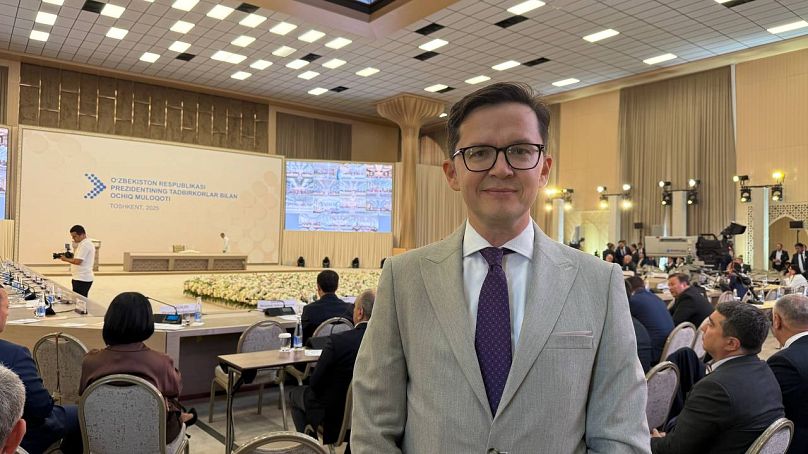
    Copyright Courtesy of Uzbekistan President’s Office

    Tax procedures will be simplified: the threshold for advance income tax will double, and from 2026, entrepreneurs will be able to register a business, open a bank account and obtain a digital signature in just 15 minutes. A new Investment Code will unify rules and guarantees for investors.
    In tourism, 5,000 hectares will be allocated for hotels and tourist facilities, with the state acting as a co-investor. In education, entrepreneurs in 80 districts with low preschool enrolment will receive incentives to build kindergartens and schools under public-private partnerships. Investors in medical clusters will be eligible for long-term loans at preferential rates.

    Related

    New Tashkent: Uzbekistan’s Urban Transformation

    Voices from business

    For many entrepreneurs, the dialogue has become a unique opportunity to engage directly with the head of state.Jamil Maksudi, Director of Business Development at Oqsaroy GroupJamil Maksudi, Director of Business Development at Oqsaroy Group
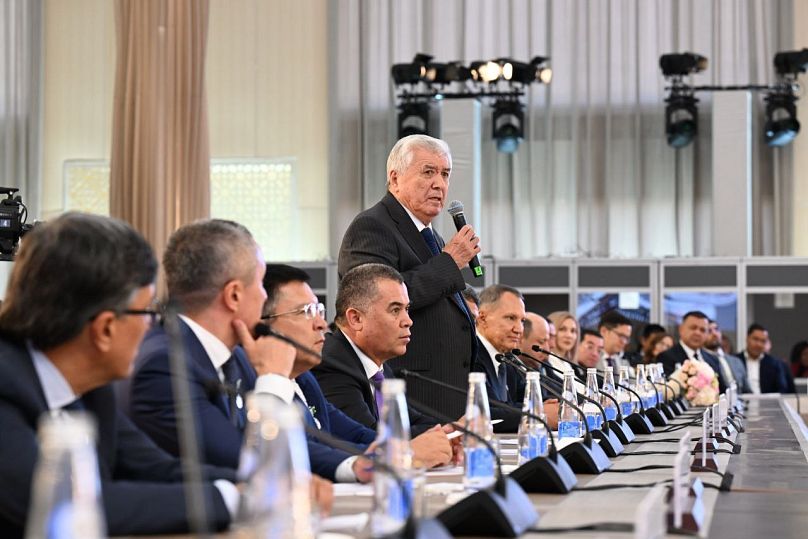
    Euronews

    Jamil Maksudi, director of business development at Oqsaroy Group, underlined the significance of the sector: “Textiles are one of Uzbekistan’s key industries. Over the past seven years we have tripled production, created more than 140 vertically integrated clusters and ensured jobs for nearly 600,000 people. Direct dialogue allows us to propose practical solutions — from improving logistics to expanding exports and promoting green technologies.”

    Ulug’bek Rustamov, executive director of the digital payments company Click, stressed the role of fintech in the country’s transformation: “When we started in 2011, there was no law on payment systems. Thanks to reforms, we now operate with full legal recognition. More than 70,000 outlets accept Click payments, and nearly 21 million people use our system. That shows how central fintech has become for business and society”.

    Related

    Uzbekistan builds pharma ambitions with €1.2bn investment in regional production and export hub

    Tohir Sharipov, founder of ProCab, one of Central Asia’s largest cable producers, emphasised export ambitions: “We export to more than 50 countries, including the EU, the US and Canada. Last year we were named national export champions, and in 2025 we expanded further into European and North American markets. Since 2017 our output has grown more than tenfold — and this proves that Uzbek industry can compete globally.”
    He added that success was possible thanks to improved investment conditions and logistics. “The dialogue with the president helps us address strategic challenges. With stable rules, access to infrastructure and strong international standards, companies like ours can keep strengthening Uzbekistan’s export potential”.An Uzbek entrepreneur shares his views during the open dialogueAn Uzbek entrepreneur shares his views during the open dialogue
    Copyright Courtesy of Uzbekistan President’s Office

    The deputy business ombudsman of Uzbekistan, Jamshid Urunov, underscored the strategic importance of entrepreneurship to national prosperity:
    “The entrepreneurial movement in Uzbekistan has become an irreversible force. The richer our entrepreneurs are, the more prosperous our people will live, the more powerful our state will be. The success of an entrepreneur is the success of our entire nation.”
    In his view, Entrepreneurs’ Day and the continuous dialogue platform help deepen this momentum of business-driven growth, turning ideas into legislation, attracting investment, and expanding exports.

    Outlook

    From textiles and fintech to cable manufacturing and tourism, entrepreneurs are increasingly seen as central to Uzbekistan’s growth model. With new reforms aimed at simplifying regulation, expanding finance and opening global markets, the government is betting on private initiative to drive innovation, jobs and competitiveness.

  • Milan Fashion Week Stuns: D&G, Prada, and Armani Take Center Stage

    Milan Fashion Week Stuns: D&G, Prada, and Armani Take Center Stage

    Milan Fashion Week Strikes a Chord for SS 2026 Menswear

    Fresh off the runway, Milan’s spring/summer show was a roaring comeback. It blended razor‑sharp tailoring with daring creativity, brought in global celebs, and turned headwear into the headline act—laughter and style in equal measure.

    Key Highlights:

    • Precision Cuts: Tailors turned sleeves into mission‑critical gadgets and trouser lines into runway relays.
    • Bold Creativity: Designers mixed fabrics like a cocktail shaker—fleece meets futurism, denim meets dreamy chiffon.
    • Star Power: International icons strutted, turning every turn into a paparazzi‑ready moment.
    • Hats Gone Wild: From velvet blow‑oil to neon cyber‑helmets, headwear was the headline—funny, fearless, and impossible to miss.

    The Mood:

    The audience roared with a mix of envy and giggles, proving once again that fashion’s best lessons are about being bold, having fun—and occasionally looking like you just stepped out of a comedy sketch.

    It’s All About the Gents: Milan’s Showstoppers for the New Season

    Why Men’re the New Cool Cats

    Last week, Milan didn’t just put up flashlights on the runway – it turned the whole city into a playground for the modern man. The designers didn’t just ask, “What will guys wear?” They asked, “How will men say, ‘I feel awesome and I can’t keep my eyes off this stitch’?”

    Wearing the Future, One Suit at a Time

    • Bold Design Rewrites – Imagine a suit that reads like a storybook and fits like a hug your sense of humor that will win a heartbeat.
    • Eco‑Chic – Sustainable fabrics swapped the old oil‑driven vibe for something green‑ish, but without compromising the swagger.
    • Tech‑Tonic – From LED hem to self‑adjusting cuffs, the future is already stitched into every outfit.
    The Show Must Go On

    Three of the most striking shows that highlighted the flair and daring most fresh-wearing, contemporary men deserve a standing ovation:

    1. Coastal Cool – Picture surf‑wave textures mixed with a crisp blazer that makes waves feel like a personal wave ride.
    2. Dark Side of the Dress – Those who want their suits to sparkle out of the dark side — a night‑time show with a twist of nightlife and an endangered casual flare.
    3. In Your Shoes – A collection that danced, bowled, and spun the old runway routine into something new.

    With Milan firmly in the spotlight, men’s fashion in 2026 isn’t just about fabric; it’s a showcase of confidence, adventure, and a wink – telling the world we’re suited for all of life, one fabulous outfit at a time.

    Dolce & Gabbana

    Pyjamas took centre stage at Dolce & Gabbana, turning sleepwear into the season’s most stylish daywear.

    Bed‑Bash Bonanza: Dolce & Gabbana’s Pyjamas Go from Slumber to Spoiler‑Alert

    Who says sleepwear is for snoouze‑only? Dolce & Gabbana shook the fashion world by pulling a literal sheets‑up from the bedroom and faking it as the freshest day‑wear on the runway.

    Dream‑Weave and Day‑Dream: The Collection’s Core

    • Stripes that could make a zebra jealous – those classic striped pyjama sets give off a “tourist‑in‑a-fair” vibe.
    • Looser cuts that’d make your sleep‑mask look like a fashion statement.
    • Raw knitted fabrics and fuzzy coats that mimic a cozy campfire, yet look runway‑ready.

    From Pillow to Pavement: How It Works

    Picture a crisp PJ top – the kind that would keep the mattress from overheating – paired with leather Bermuda shorts. It’s a match made in casual heaven, blurring the line between lounging at home and looking like a glare‑tack Tir Na n’Oir (and you’ll never have to replace your sweater again).

    Finisher: Glitter on Glitter

    The finale had the kind of shimmer that could be read as a beaded embroidery rave, and a pair of slick sliders that finished everything off while still fitting perfectly in a bunny‑shoe closet.

    Takeaway

    So next time you’re about to hit the city in your go-to tee, remember that D&G made it’s own “I’m‑just‑sleeping‑but‑still‑looking‑good” vibe. Your pillow could be your new style consultant.

    Prada

    Models wear creations as part of the men's Prada Spring-Summer 2026 collection.

    Prada’s 2026 Men’s Line: Models Shipping the Line

    Yesterday’s runway was a full-on fashion party, with models rocking every single piece from Prada’s Spring‑Summer 2026 men’s collection. The outfits were sharp, bold, and somehow managed to scream fresh while still feeling like a classic Prada vibe.

    What the runway was all about

    • Bright, edgy jackets that look like they’re ready for a cityscape adventure.
    • Tailored slacks that blend cool street‑style flair with high‑class sleekness.
    • Details that pop—think subtle leather textures and daring color pops.

    Check out the top picks that models showed off those on the catwalk:

    Top Three Picks

    • Flair with a twist: The lightweight trench that feels like a second skin.
    • Bold but balanced: A pair of slim-fit chinos topped off with an unexpected accent stripe.
    • Future‑proof style: Garments that are not just trending now, but set to remain iconic for years.

    All in all, the show was a lit snapshot of how Prada keeps pushing men’s fashion into the next decade with a little swagger enough to keep the world on its toes.

    Prada's Spring-Summer 2026 collection embraced the 'no-pants' trend

    Prada’s 2026 Spring‑Summer: No Pants, All Play

    In a world that feels more tense day by day, designer Miuccia Prada teamed up with Raf Simons to drop a season that feels like a breath of fresh air.

    From Shorts to Sophistication

    • High‑cut shorts that beff off of the waistline—think “let’s get lost in the summer” vibes.
    • Sun‑printed shirts that look like they were printed by a beach day itself.
    • Layered tailoring that whispers “I’m moving up the ladder, but the shoes are still flip‑flops.”
    • Loose silhouettes that give you the freedom to bumble through the runway without losing the edge.

    Hats, Color Blocks, and a Touch of Wry Humor

    • Cone‑shaped raffia hats that look like they were invented by a kid who loves cones.
    • The palette starts off shy, curling into muted neutrals before exploding into bold, vivid color blocks.

    The Big Idea – Innocence Meets Intellect

    Prada’s collection is not just about what you put on your shoulders; it’s about a fashion reflection—you don’t wear it to react to the chaos, you wear it to reflect, to laugh, and to move forward.

    Armani

    Giorgio Armani’s latest  collection embraced a free-spirited, global aesthetic.

    Armani’s Global Groove

    Think of Giorgio Armani’s latest drop as a passport-free fashion fiesta, where every stitch feels like a spontaneous street‑style party across continents. The line doesn’t just hug your body; it embraces the whole planet.

    • Free‑spirit vibes – Drapes that move like a breeze over a mountaintop, no stiff collars here.
    • World-wide appeal – From Mumbai’s bazaars to New York’s skyline, the collection feels like an international pop‑concert.
    • Mix‑and‑match magic – Pair a silk scarf from Seoul with a denim jacket from Rio and you’re ready for the runway.

    Credit: AP Photo

    An Armani model wears a straw hats low over the eyes,

    Giorgio Armani: The Ghost of the Runway

    Picture this: an Armani model casually tilting a straw hat just below the eye line, like a secret sign that says, “I’m stylish, even in the hat’s shadow.” Though the iconic designer himself was nowhere in sight, his aura still floated through the Glitz‑Glitz arena.

    Why the Silence Felt So Loud

    • Giorgio’s absence was the kind of silence you’d feel in a dressing room with laughter echoing.
    • Yet, the runway vibrated with his fingerprint—elegance that hasn’t slipped out of habit.

    The Emporio Line: Travel Meets Timeless

    The Emporio Armani Spring/Summer 2026 collection was built for the modern nomad. Think:

    • Lightweight tunics that feel like a cloud—perfect for that 5-kilometer walk to the cafe.
    • Scarf‑collar jackets that double as a stylish umbrella when the sky decides to throw a drizzle.
    • Moroccan‑inspired prints that whisper cultural curiosity and a dash of desert adventure.
    • Breezy natural fabrics that keep you chill while you chase horizons.
    Final Notes

    The collection didn’t just look good; it spoke to wanderers longing for tranquility and exploration. And yes, even with Giorgio out of the spotlight, the design still proved his legendary touch was everywhere—like a perfectly timed joke you only get after the punchline.